Last updated October 31, 2026
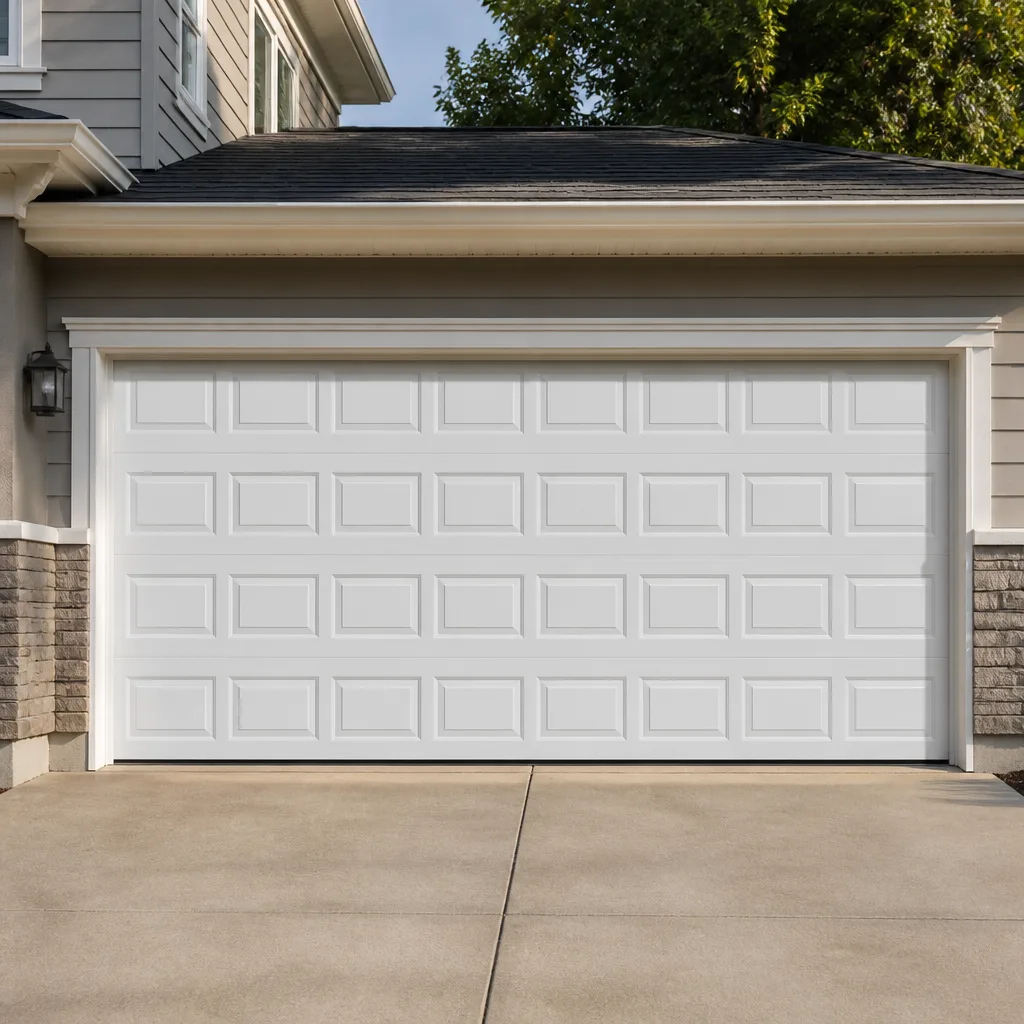 Raised-panel steel
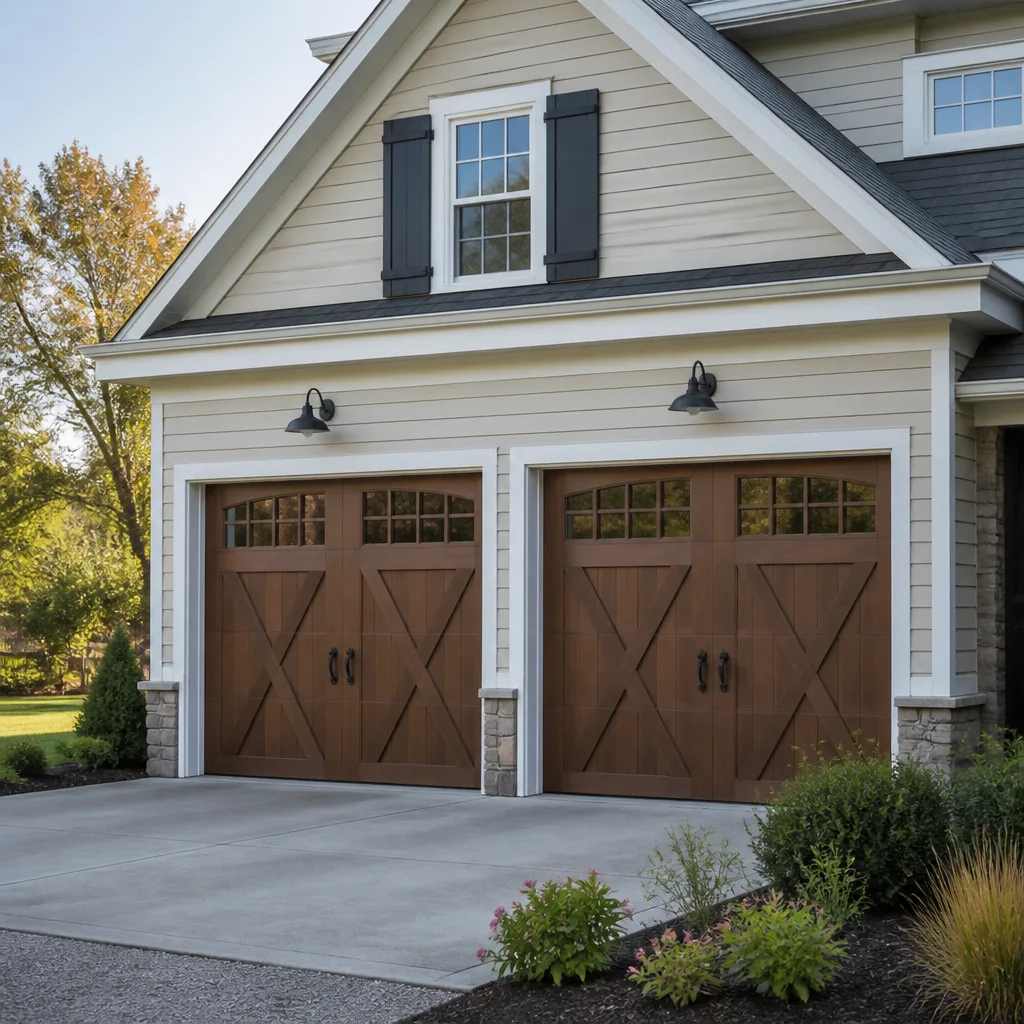 Carriage house
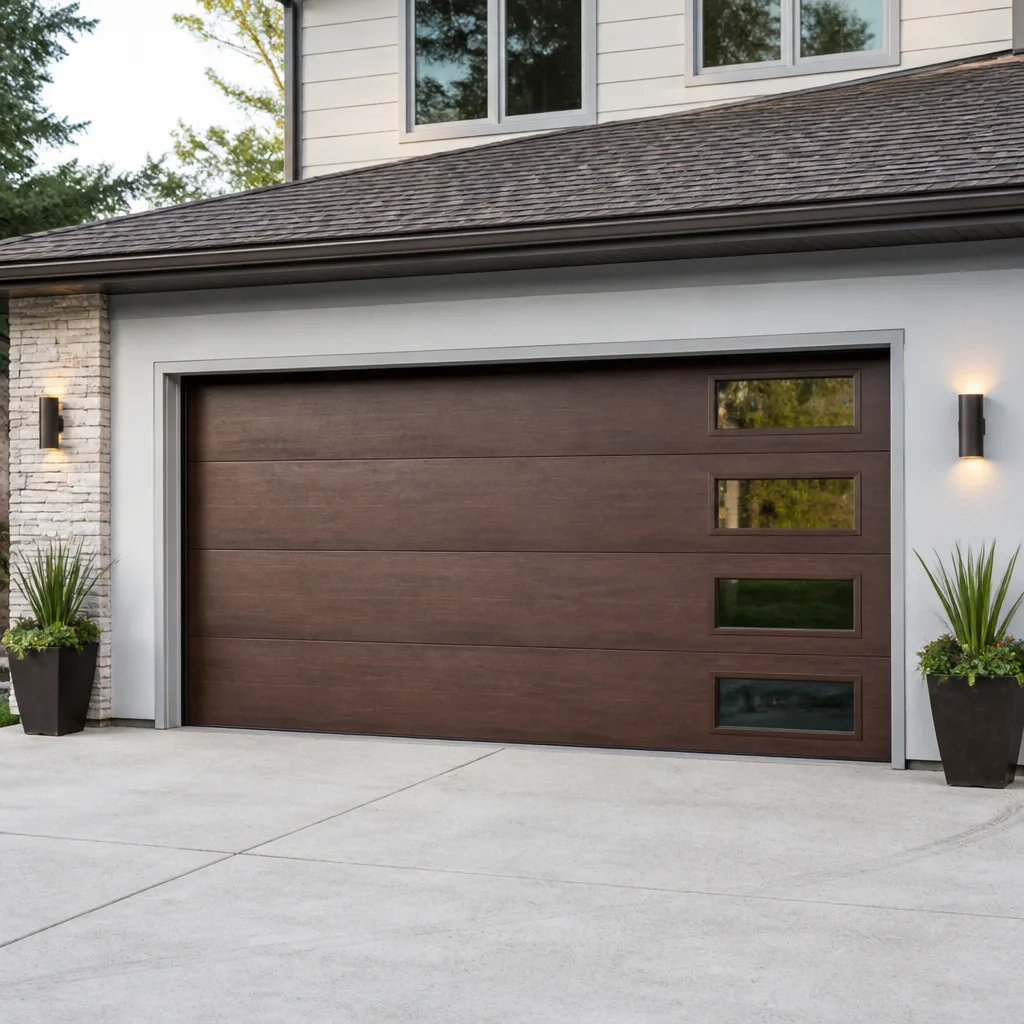 Modern flush
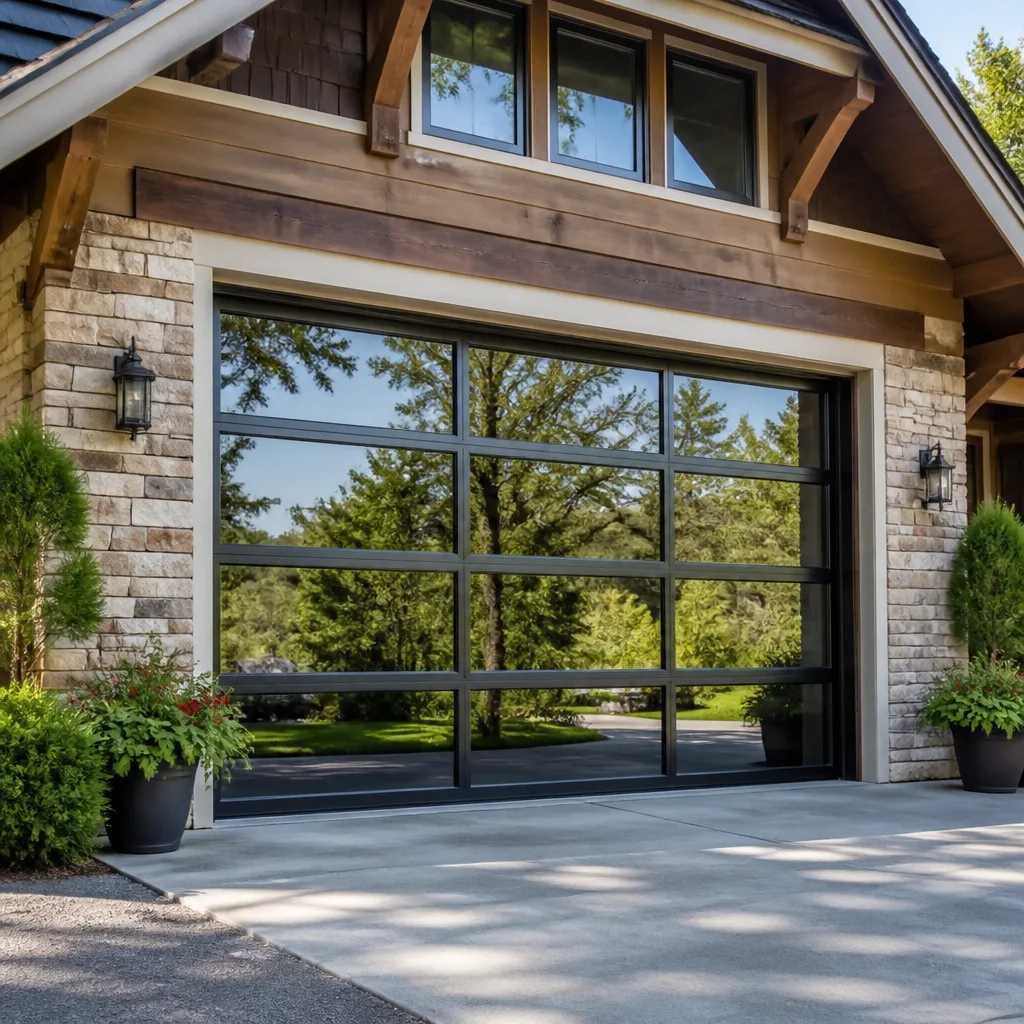 Full-view glass
 LiftMaster openers
 Chamberlain openers
Full 25-point door and opener safety check with every visit - springs, cables, rollers, tracks, and your LiftMaster or Chamberlain opener included
You get a price before we start. It does not change when the truck arrives.
Get your free estimateGarage Door Repair Maintenance Checklist for Coral Gables Homeowners
Here’s a number most Coral Gables homeowners won’t believe: a significant share of the garage door failures we repair in this city start with someone doing maintenance the wrong way, not skipping it. The most common culprit is using a petroleum-based lubricant that attracts the fine salt particulate Miami air carries year-round, turning what should be a protective coating into a grinding compound that eats rollers and bushings from the inside—a problem our Garage Door Repair services address regularly. This checklist is built specifically for Coral Gables, where humidity hovers in the 70-90% range, hurricane season runs six months long, and the same salt-air corrosion that ages boats in the Marina also attacks your door hardware.
Styles & brands we work with
Quick Answer
A garage door maintenance checklist for Coral Gables homeowners should include monthly visual inspections of rollers, cables, and springs; dry silicone lubrication every 3-4 months; seasonal weatherstripping checks due to Miami heat and UV degradation; pre-hurricane-season reinforcement inspection each May; and annual professional inspection of torsion spring hardware, which rusts faster in coastal humidity than it does inland. The single most important habit is using the right lubricant: dry silicone or PTFE spray, never WD-40 or penetrating oils.
Table of Contents
- The Salt-Air Lubrication Rule (The Mistake That Costs Coral Gables Homeowners Most)
- Monthly Visual Inspection: What to Look For
- Torsion Spring & Hardware Rust Inspection Protocol
- Weatherstripping: Miami Heat vs. National Averages
- Hurricane Season Prep: The Separate Checklist
- Opener Circuit Board & Motor Care in Poorly Ventilated Garages
- The Coral Gables Lubrication Schedule (Step-by-Step)
- Common Mistakes to Avoid
- When to Call a Professional
- Frequently Asked Questions
- The Bottom Line
The Salt-Air Lubrication Rule (The Mistake That Costs Coral Gables Homeowners Most)
Salt is the quiet killer of garage door hardware in Coral Gables. The same marine layer that keeps our mornings cool and our foliage green deposits microscopic salt crystals on every exposed surface of your garage door system. When you spray a wet, oil-based lubricant like WD-40 onto your rollers, hinges, and springs, that oil creates a sticky film. Salt particles stick to the film. Then the door cycles, and that salty oil mixture works its way between the roller and its bearing surface. Within weeks, you’ve created a grinding paste that wears parts faster than if you’d done nothing.
In our experience maintaining doors throughout Coral Gables, from the historic homes near the Biltmore to newer construction in the Hammock Oaks area, the pattern is consistent: doors lubricated with petroleum-based products show accelerated roller and bushing wear within 6-12 months. Doors lubricated with dry silicone or PTFE spray typically show minimal wear over the same period.
What to use:
- Dry silicone spray (aerosol, with a straw applicator for precise delivery)
- PTFE (Teflon) dry lubricant – excellent for rollers and hinges
- White lithium grease – acceptable for the torsion spring coil gaps, used sparingly
What to avoid:
- WD-40 – a solvent and water displacer, not a lubricant; it strips existing lubricant and attracts salt particulate
- Penetrating oils (Liquid Wrench, PB Blaster) – too thin; they run off and leave a sticky residue
- Motor oil or 3-in-1 household oil – heavy, attracts dirt and salt, turns into sludge
- Grease applied to rollers – traps grit in the ball bearings and accelerates failure
The rule is simple: dry, not wet. If you can see a liquid film after applying, you used the wrong product. A dry lubricant leaves a fine powdery coating that repels moisture and salt without creating a sticky trap. This single change extends roller life dramatically in coastal Coral Gables conditions.
For full-service help with your system, the Coral Gables Garage Door Service home team works on the brand you already have, and we’d rather show you how to maintain it right than sell you a new door.
Monthly Visual Inspection: What to Look For
Ten minutes once a month catches most failures before they strand you. The key is knowing what “normal” looks like so abnormal stands out. Here’s the monthly walkthrough we recommend for Coral Gables homeowners, in order of importance:
- Stand back and look at the door in the closed position. Check the door panels for even alignment. If the bottom panel is uneven or the door lists to one side, you have a spring tension issue or a damaged roller track. Don’t ignore this: uneven doors put asymmetric strain on every component.
- Open the door and watch it travel. It should move smoothly, with no hesitation, shudder, or audible grinding. Jerky movement in Coral Gables humidity often means roller corrosion is already underway. The door should also stay put when open – if it drifts downward, the springs are losing tension.
- Inspect the rollers. Look at each roller where it meets the track. Steel and nylon rollers both fail in salt air, but in different ways: steel rollers rust and grind, nylon rollers crack and delaminate. Check for visible rust blooms on the steel bearings inside nylon rollers.
- Check the cables on both sides. Look for frayed strands, especially near the bottom fixture where moisture accumulates. These cables are under tension and can snap without much more warning. If you see a single broken strand, that cable is on borrowed time.
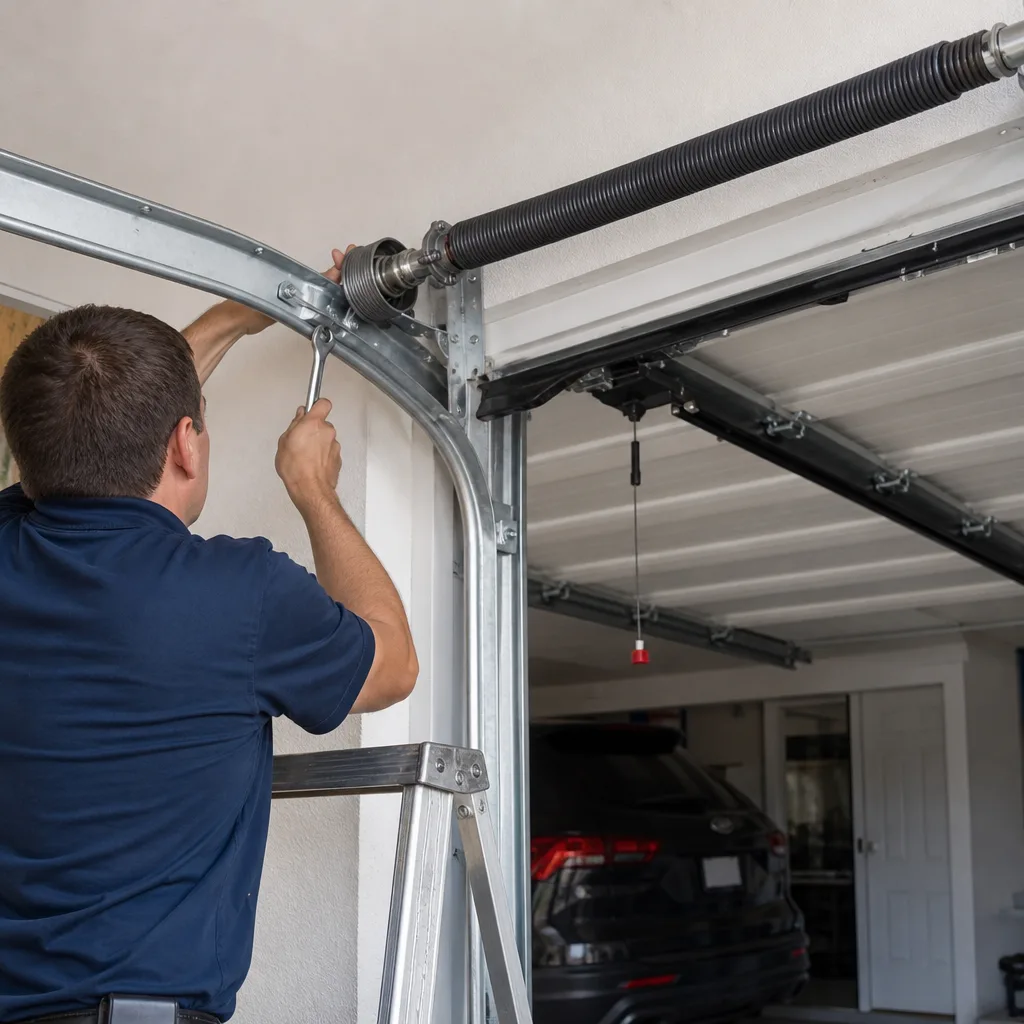
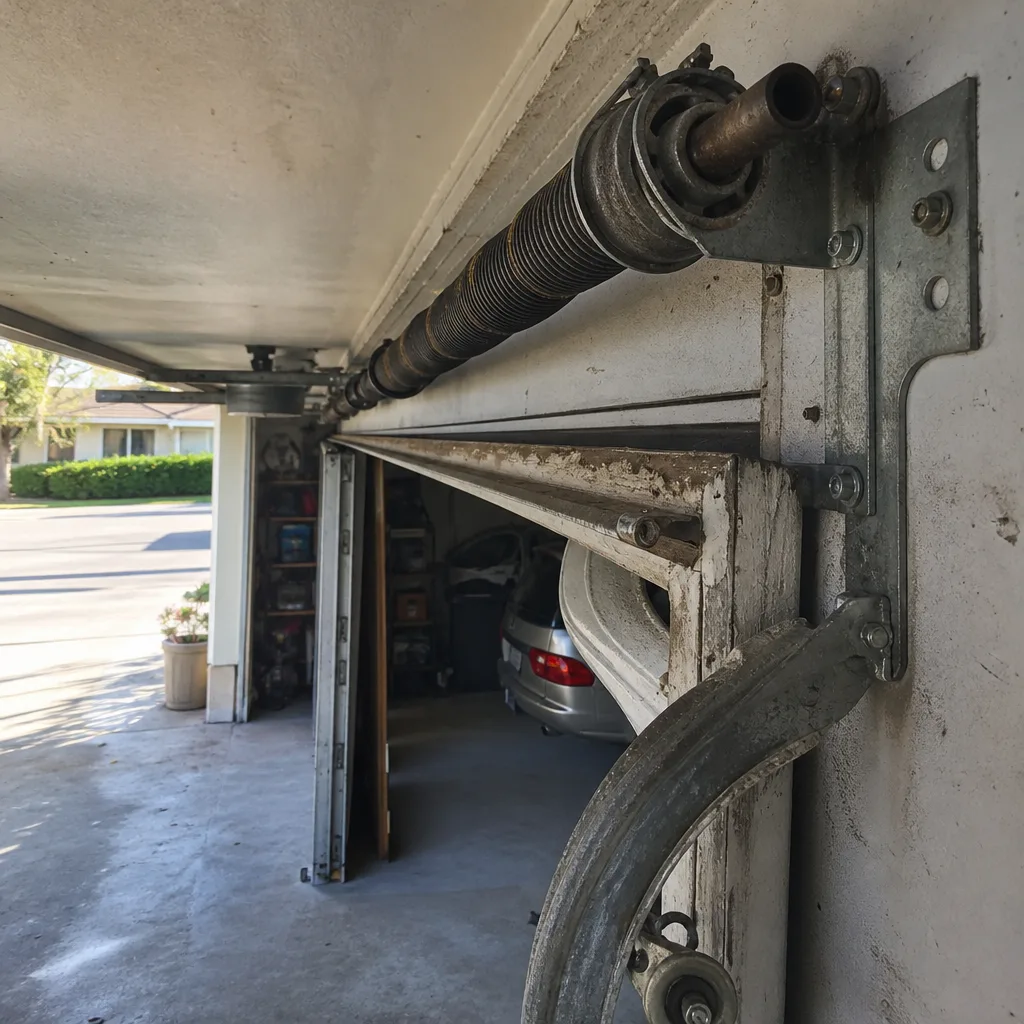
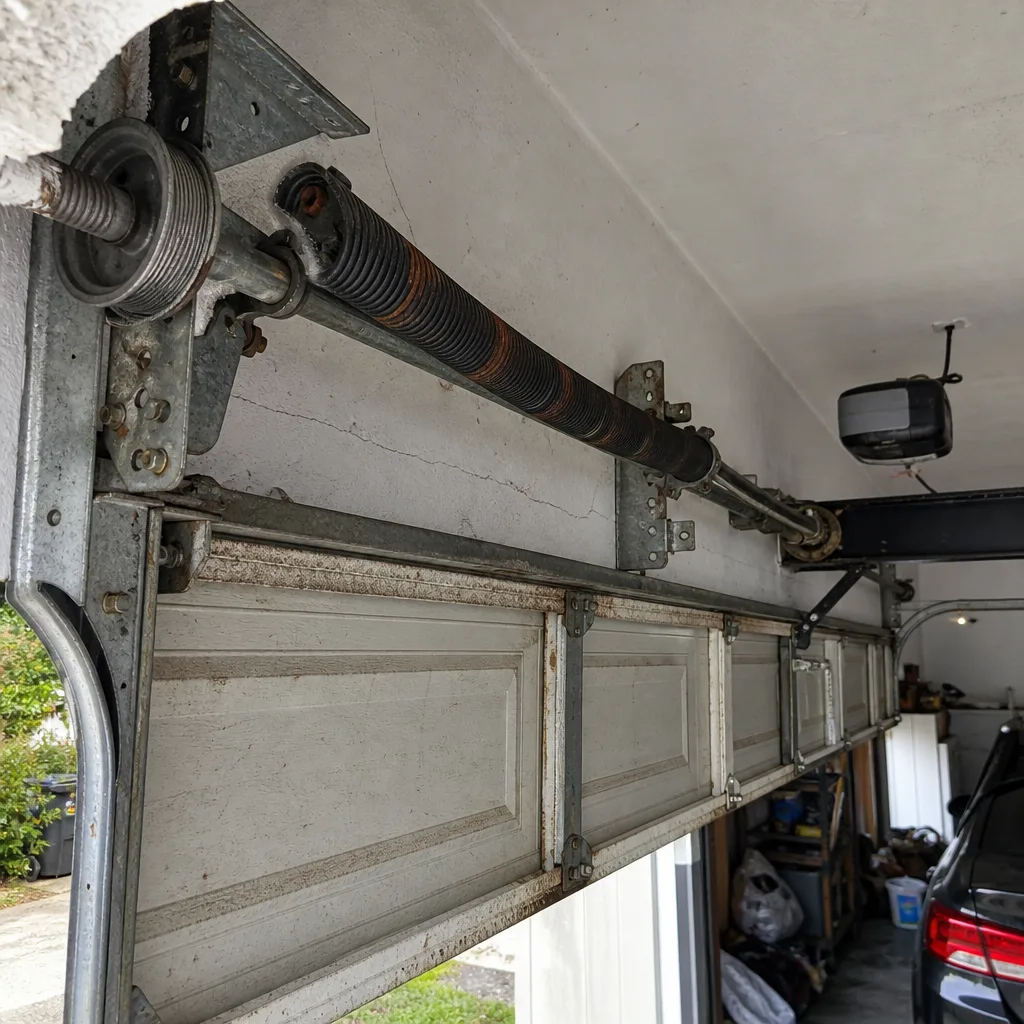
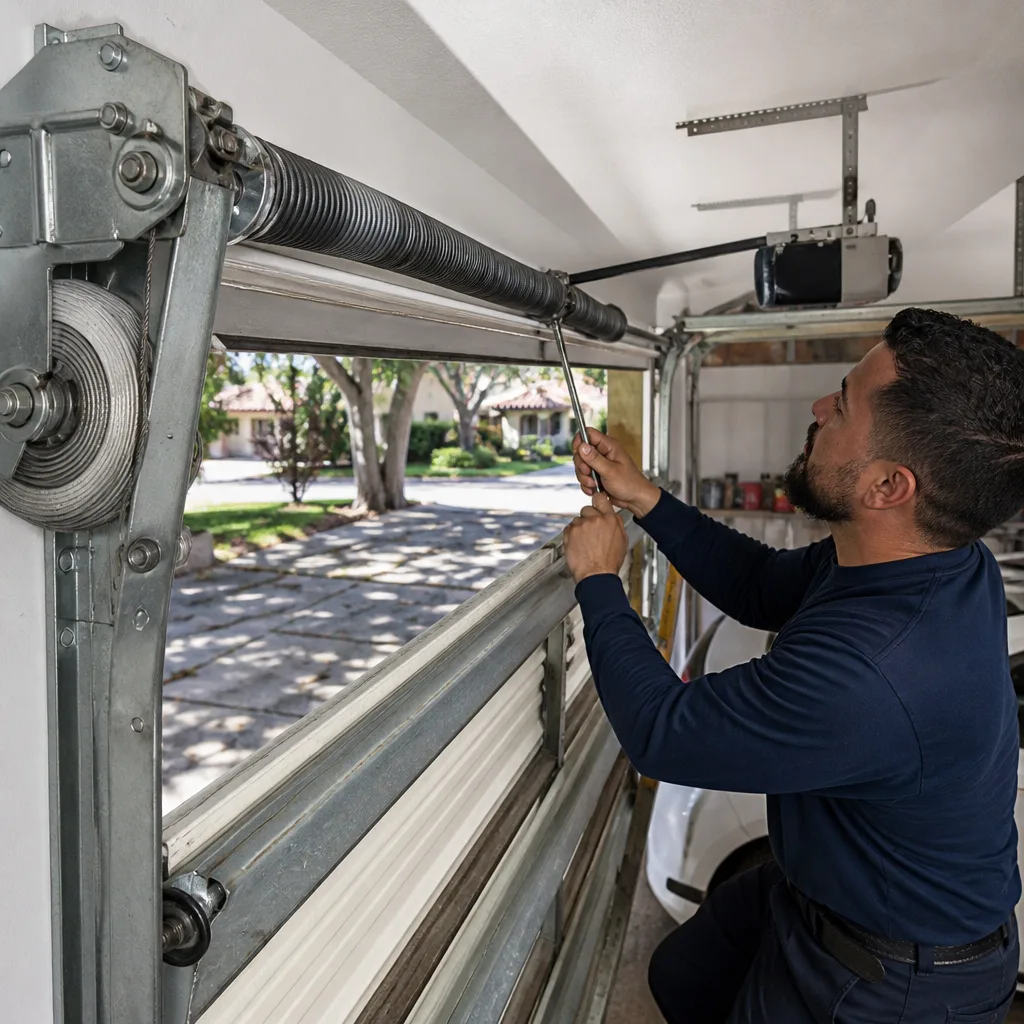
- Inspect the torsion spring. It sits on the bar above the closed door. Look for rust scale on the coils and the mounting cones. In Coral Gables, zinc-coated springs typically show rust within 18-24 months; if yours is older than that and rusted, it needs attention. Do not touch the spring: visual inspection only. The spring holds enough energy to cause serious injury if it fails under adjustment.
- Listen. Run the door up and down once. A well-maintained door is quiet. Squeaks mean metal-on-metal contact. Grinding means debris in the bearings. Rattling means loose mounting hardware, likely from vibration and thermal cycling.
- Check the balance. Disconnect the opener using the emergency release cord (the red handle), then manually lift the door. It should open smoothly and hold at midpoint. If it won’t stay up on its own, the springs are worn and need professional replacement. This test is safe to do manually, but reconnect the opener afterward.
Run this checklist on the first Saturday of every month. It takes ten minutes and gives you a running baseline of your door’s health, which is invaluable when something changes.
Torsion Spring & Hardware Rust Inspection Protocol
Torsion springs are the highest-risk component on any garage door, and Coral Gables humidity accelerates their failure profile. Here’s what’s happening: torsion springs store energy by twisting under high tension. Over time, the spring steel develops micro-fractures from normal cycling. In dry climates, those fractures progress slowly. In coastal humidity with salt exposure, rust attacks the stress points directly, speeding fatigue cycles significantly.
What to inspect:
- Spring coil surface: Look for uniform rust (a dull orange-brown coating) versus pitted rust (visible scale and flaking). Uniform rust is cosmetic; pitted rust is structural. If you see flaking metal, the spring is compromised.
- Mounting cones and set screws: These are the components at each end of the spring that anchor it to the torsion bar. In Coral Gables, they’re often the first to rust because they’re exposed to the most air movement. Rusted set screws can seize, making future spring replacement more difficult.
- Center bearing and cable drums: Located on the torsion bar. The bearing plate bracket rusts in salt air, especially on older doors. The cable drums should show no visible rust on the cable grooves.
- Bottom brackets and cables: The bottom of the door is the moisture collection point. Check for rust on the L-shaped bottom brackets and for fraying in the cable loop that attaches to them.
Signs your torsion spring is nearing failure:
- Visible gap in a coil (the spring has already broken)
- Door feels heavy when you operate it manually
- Door creaks or groans when opening, especially in the morning after overnight cooling
- Rust scale falling onto the garage floor beneath the spring line
- One side of the door rides higher than the other
Corrosion-prevention steps you can do safely:
- Apply dry silicone to the spring coils every 3-4 months. This leaves a moisture-repelling film that slows rust formation without attracting salt.
- Keep the garage as dry as practical. A dehumidifier set to 55-60% relative humidity makes a measurable difference in hardware lifespan for attached garages in Coral Gables.
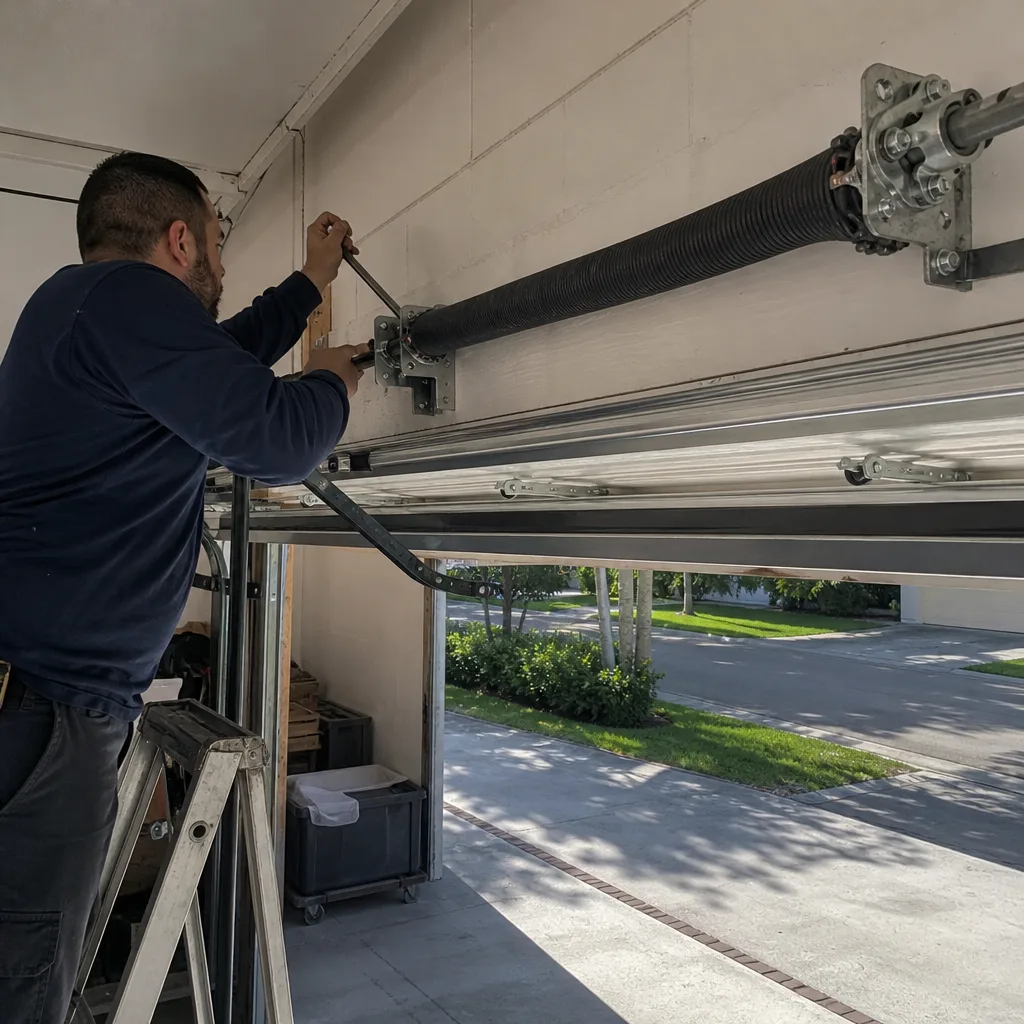
- Don’t touch the spring with tools. Any adjustment of torsion spring tension requires a professional with the right winding bars and training. The energy stored in a wound torsion spring is enough to break bones or worse. This is not a DIY task.
If you’re seeing significant rust or any of the failure signs above, your spring is a candidate for replacement. Every brand we service – LiftMaster, Chamberlain, Genie, Clopay, Amarr, Wayne Dalton, Craftsman, and Raynor – uses the same fundamental torsion spring principle, but mounting hardware and spring rates vary by manufacturer and door weight. Getting the right spring rate matters more than the brand name on the packaging.
Weatherstripping: Miami Heat vs. National Averages
Most national garage maintenance guides tell you to replace weatherstripping every 3-5 years. That’s wrong for Coral Gables. Here, UV exposure and heat degradation shorten that interval to 18-36 months, depending on door orientation and sun exposure.
Why the difference matters:
- South-facing doors in Coral Gables take direct sun for 8+ hours a day, 365 days a year. The vinyl and rubber compounds in weatherstripping break down under sustained UV radiation, losing flexibility and developing cracks.
- West-facing doors get the brutal afternoon sun plus reflected heat from driveways and walkways, accelerating degradation further.
- North-facing doors under deep overhangs fare better, but still endure 90°F+ ambient temperatures for months at a time, plus 70%+ humidity.
- The rubber strip at the bottom of the door (the astragal) cracks and splits when it loses plasticizer to heat. Once split, it stops sealing.
Signs your weatherstripping is failing in Coral Gables:
- Visible light coming under the door when closed (the most obvious sign)
- The rubber feels stiff and brittle rather than pliable when you bend it
- Water intrusion on the garage floor after a heavy afternoon thunderstorm
- Pest entry – ants, spiders, and lizards find their way through degraded seals
- Increased garage temperature, which drives up cooling costs for adjacent rooms
Replacement is straightforward. The bottom seal slides out of the aluminum retainer channel and a new one slides in. Side and top seals usually attach with screws or press into a track. When you replace the bottom seal, use a product rated for high-UV environments. Marine-grade rubber compounds (the same class used on boat hatches) hold up measurably better in Coral Gables than standard residential seals.
Budget about $40-$80 for materials if you’re doing it yourself, or ask a Garage Door Repair in Miami technician to handle it during a routine inspection. It’s one of the lowest-cost, highest-value maintenance tasks most homeowners overlook.
Hurricane Season Prep: The Separate Checklist
Hurricane season runs from June 1 through November 30, and Coral Gables homeowners should run a separate prep checklist every May. This is not the same as routine maintenance. The goal here is structural readiness for sustained wind, flying debris, and the pressure differentials that hurricanes create.
- Inspect and reinforce the door itself. Standard residential garage doors are the largest opening on your home and the most likely point of structural failure during a hurricane. Check that all panel hinges are tight. Loose hinges allow panel flexing that can pull a door out of its tracks under wind load.
- Verify the door’s wind rating. Coral Gables building codes require garage doors to meet specific wind-pressure ratings depending on your home’s location and exposure. If you don’t know your door’s rating, look for a sticker on the interior panel. Doors built before the mid-1990s often fall short of current Miami-Dade code standards. If your door lacks the required rating, consider Garage Door Installation in Miami with a wind-rated model from Clopay, Amarr, Wayne Dalton, or Raynor.
- Check the track mounting. Commercial-grade track brackets that anchor the tracks to the wall and ceiling should be present. The tracks themselves should be securely fastened at every bracket point. In storm conditions, tracks that aren’t properly anchored allow the door to deflect, and once the door leaves the tracks, the wind gets in.
- Test the emergency release. The red cord that disconnects the opener should pull free without resistance. During power outages, you’ll need to operate the door manually. A corroded or jammed release mechanism is a surprise you don’t want in July.
- Inspect the weatherstripping at full perimeter. Ensure the bottom seal and side seals create a full contact barrier. Water intrusion during a hurricane isn’t just a nuisance: soaked insulation, damaged stored items, and mold growth all follow.
- Verify opener battery backup if you have one. LiftMaster and Chamberlain models with battery backup should run a self-test. If your opener is a Genie or Craftsman unit without battery backup, consider whether manual operation is an acceptable fallback for your household.
For any Garage Door Opener Repair in Miami needs – batteries, circuit boards, or replacement – we recommend addressing them in May, not August. Every hurricane season, opener failures spike in the weeks leading up to a storm, and repair crews get booked out.
Opener Circuit Board & Motor Care in Poorly Ventilated Garages
Many Coral Gables homes were built before current ventilation standards, and their garages reflect it: enclosed spaces with no windows, no vents, and no air exchange. Combined with Miami heat, these garages become ovens. Interior garage temperatures in Coral Gables during summer routinely exceed 110°F, and that’s before accounting for the heat a car engine contributes when you pull in after a drive.
What heat does to garage door openers:
- Circuit board solder joints expand and contract with every thermal cycle. Over hundreds of cycles, hairline cracks develop in the solder, causing intermittent failures: the opener works sometimes, then doesn’t. This is the single most common opener repair we make on homes in older Coral Gables neighborhoods.
- Capacitors degrade faster in sustained heat. The electrolytic capacitors on the logic board and motor controller lose capacity, leading to slow operation, failure to start, or the “door moves a few inches and reverses” symptom.
- Plastic gears and bushings soften at sustained high temperatures. Chamberlain and Craftsman openers with plastic drive gears are particularly susceptible in hot garages.
- Motor windings run hotter, shortening overall motor life. An opener motor rated for 10,000 cycles at normal temperatures will fail sooner in a garage that never drops below 95°F.
What you can do:
- Improve garage ventilation. Even a small exhaust vent or louvered panel makes a measurable difference. Garage-specific exhaust fans with temperature triggers are available and work well in Coral Gables conditions.
- Keep the opener’s cooling areas clear. Opener motors rely on airflow over the housing. Don’t stack boxes or store items on top of the opener unit.
- Keep the opener’s internal settings conservative. Most openers allow you to adjust force sensitivity. Higher force settings make the opener work harder and run hotter. Correct force settings are those that just barely open and close the door reliably.
- Consider an opener designed for higher-temperature environments. Belt-drive models from LiftMaster and Chamberlain tend to run cooler than chain-drive equivalents, and their DC motors generate less heat overall.
If your opener is showing intermittent behavior that comes and goes with the weather, that’s a classic thermal cycling symptom. We work on opener electronics across all the major brands, and the fix is usually a component-level repair rather than a full replacement.
The Coral Gables Lubrication Schedule (Step-by-Step)
Here’s the exact lubrication routine we recommend for Coral Gables homeowners, tuned for our climate. Run it four times a year: January, April, July, and October. The July pass is the most important, since it’s your pre-peak-hurricane-season lubrication.
Supplies needed:
- Dry silicone spray with a straw applicator (one can lasts about a year at this schedule)
- Clean rags (microfiber works best)
- White lithium grease (for torsion spring coil gaps only)
- A step stool or ladder, positioned safely
- Clean the tracks first. Use a dry rag to wipe the interior of both vertical and horizontal tracks. Remove any accumulated dust, sand, or salt residue. Do not lubricate the tracks themselves. The rollers run on the track surface, and lubricant in the track attracts the exact grit you’re trying to avoid.
- Lubricate the rollers. Apply a small amount of dry silicone to the ball bearings and stem of each roller. If you have nylon rollers with sealed bearings, a light coating on the stem is sufficient. For steel rollers, apply to the stem, bearing, and pivot point. A little goes a long way: two seconds of spray per roller is plenty.
- Lubricate the hinges. Each hinge has a pivot pin. Apply a drop of silicone at each pin point. The hinge plates themselves don’t need lubrication.
- Lubricate the torsion spring. This is the one component that benefits from white lithium grease rather than dry silicone. Spray the lithium grease into the coil gaps, using the straw to reach between coils. Work your way across the entire spring length. The grease works into the coil interface and slows rust while the spring cycles. If you see significant rust before lubricating, photograph it and schedule a professional inspection – lubricating a severely rusted spring doesn’t extend its life.
- Lubricate the cable drums. Apply dry silicone to the point where the cable wraps around the drum. This reduces cable friction and slows cable wear.
- Wipe the opener rail. For chain-drive openers, apply a light coat of white lithium grease to the chain itself. For belt-drive openers, do not lubricate the belt: belt drives are self-lubricating by design. For screw-drive openers, apply white lithium grease to the screw channel. LiftMaster, Chamberlain, and Genie screw-drive models all benefit from this treatment.
- Cycle the door once. Open and close it fully to distribute the lubricant, then wipe away any excess from the edges of rollers and hinges.
This entire routine takes 20-25 minutes once you know the touchpoints, and it’s the highest-value maintenance you can do yourself in Coral Gables. If you’d rather have it handled professionally, we include lubrication as part of our inspection visits, and we work on whatever brand you have installed.
Common Mistakes to Avoid
- Using WD-40 as a lubricant. WD-40 is a water displacement product designed for rust prevention and cleaning, not lubrication. In Coral Gables salt air, it actively makes rollers worse by creating a sticky surface that grabs salt particulate. Use dry silicone or PTFE spray instead.
- Lubricating the tracks. The rollers don’t slide on the tracks; they roll. Lubricant in the tracks just collects dust and sand, creating a slurry that causes roller wear. Keep tracks clean and dry.
- Ignoring a squeaking door. A squeak is metal-on-metal contact. It’s not an aesthetic issue; it’s the sound of wear occurring in real time. Locate and address the squeak within a week.
- Skipping the hurricane prep checklist because “nothing happened last year.” Coral Gables dodges direct hits regularly, but the one time the track is weak, the door is unrated, or the seal is cracked is the time it matters.
- Waiting until the spring breaks to replace it. Springs that show visible rust scale are on a countdown. Replacement is more affordable and less disruptive than emergency repair when the door is stuck half-open.
- Adjusting spring tension as a DIY project. Torsion springs store lethal energy. No amount of YouTube confidence compensates for improper winding bars or technique. This is the one task on any maintenance list that should never be attempted by a homeowner.
- Overlooking the garage’s humidity level. If your garage is consistently damp, every maintenance task you do is working against the environment. A dehumidifier is the single best investment for extending the life of everything in your garage, including the door hardware.
When to Call a Professional
Some conditions are immediate call situations, and recognizing them saves you money and risk. A door that won’t stay open signals spring failure. Exposed frayed cable strands mean the cable is days or weeks from snapping under load. A door that opens slowly or intermittently points to opener circuit board or capacitor failure. A door that’s visibly rusted at the torsion spring mounting cones needs assessment before the hardware seizes. And any time the door operates with a loud, sudden noise – a bang, a pop, or a snap – assume a spring or cable has failed and do not operate the door further. The door is now unbalanced, and the opener is fighting a load it wasn’t designed for. Coral Gables Garage Door Service offers free estimates in Coral Gables – call (855) 752-9022 and we’ll send a technician who works on the brand you already have.
Frequently Asked Questions
Monthly visual inspections plus lubrication every 3-4 months is the right cadence for Coral Gables conditions, with a separate hurricane prep checklist every May. Residents near the water or golf course should add an extra rust inspection pass during the summer months due to increased salt exposure.
Dry silicone spray or PTFE lubricant is the right choice for Coral Gables garage doors, because wet petroleum-based lubricants like WD-40 attract salt particulate from the marine air and create a grinding compound that destroys rollers and hinges. White lithium grease is acceptable for the torsion spring coil gaps.
Standard zinc-coated torsion springs in Coral Gables typically last 5-8 years, depending on door weight, cycle frequency, and garage ventilation. This is shorter than the national average because salt air accelerates rust formation at the spring’s stress points, and rust shortens fatigue life. Homes with dehumidified garages and regular silicone application on the springs see the longest service intervals.
Most maintenance tasks are safe for homeowners to perform: visual inspections, cleaning, weatherstripping replacement, and lubrication are all manageable with basic tools and proper care. The exception is anything involving torsion spring adjustment or replacement, which requires specialized winding bars, proper technique, and carries serious injury risk if done incorrectly. If you’re unsure, call a professional for those specific tasks.
If the door won’t open or close during hurricane season, first check the emergency release by pulling the red cord and operating the door manually. If the door is heavy or the spring has broken, don’t force it. If the opener is the problem, a circuit board or thermal failure may be the cause. Call (855) 752-9022 for a free estimate – we work on all major opener brands and carry the parts on the truck to handle most repairs in one visit.
A basic garage door tune-up in Coral Gables typically costs between $85 and $150 depending on the door’s condition and whether parts need replacement. Services that include lubrication, inspection, balance testing, and minor adjustments fall in that range, while repairs involving spring replacement or opener electronics run higher. All work is quoted and agreed before we start, so the price you’re told is the price you pay. Call (855) 752-9022 for an exact quote – estimates are free.
The Bottom Line
Garage door maintenance in Coral Gables is a different job than it is in Phoenix or Atlanta, as outlined in our Garage Door Warning Signs: A Coral Gables Homeowner’s Reference Guide. Salt air, relentless humidity, UV exposure, and hurricane season combine to create a failure profile that generic checklists miss entirely. The right habits – dry silicone instead of WD-40, monthly visual inspections focused on rust points, weatherstripping replaced on an 18-36 month cycle, hurricane prep every May, and humidity control in your garage – add years to your door’s life and prevent the failure that always seems to happen at the worst possible moment. Every component on your garage door is replaceable, and early intervention is always cheaper than emergency repair. Start with the monthly walkthrough. Note what you see. And when something doesn’t look right, get a professional opinion before it becomes a bigger problem.
For service in Coral Gables on any brand of door or opener, call (855) 752-9022 for a free estimate. We’ll inspect your system, tell you what it needs, and quote a price before any work begins.
Written by the team at Coral Gables Garage Door Service, serving Coral Gables since 2014. Explore more guides & resources on our blog.
See the difference
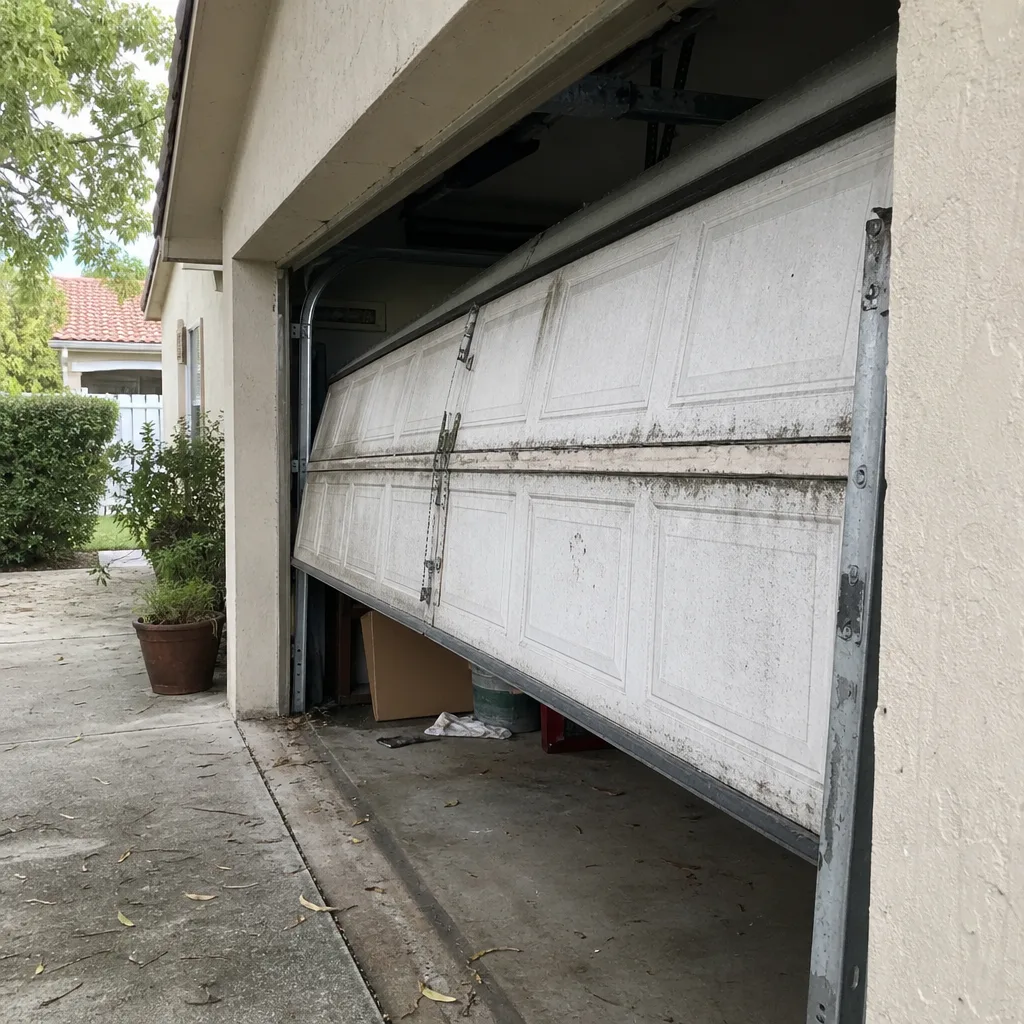 Before
 After
 Before
 After
 Before
 After