Last updated October 31, 2026
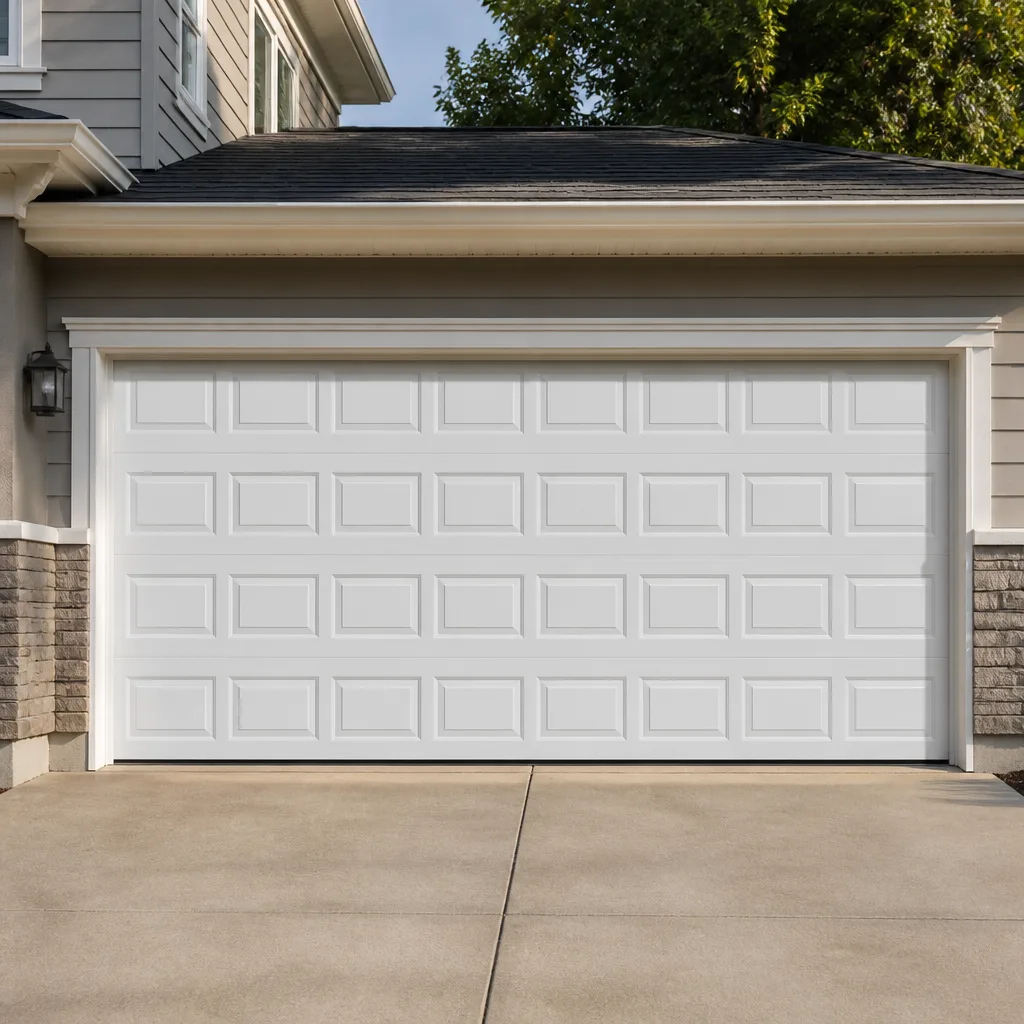 Raised-panel steel
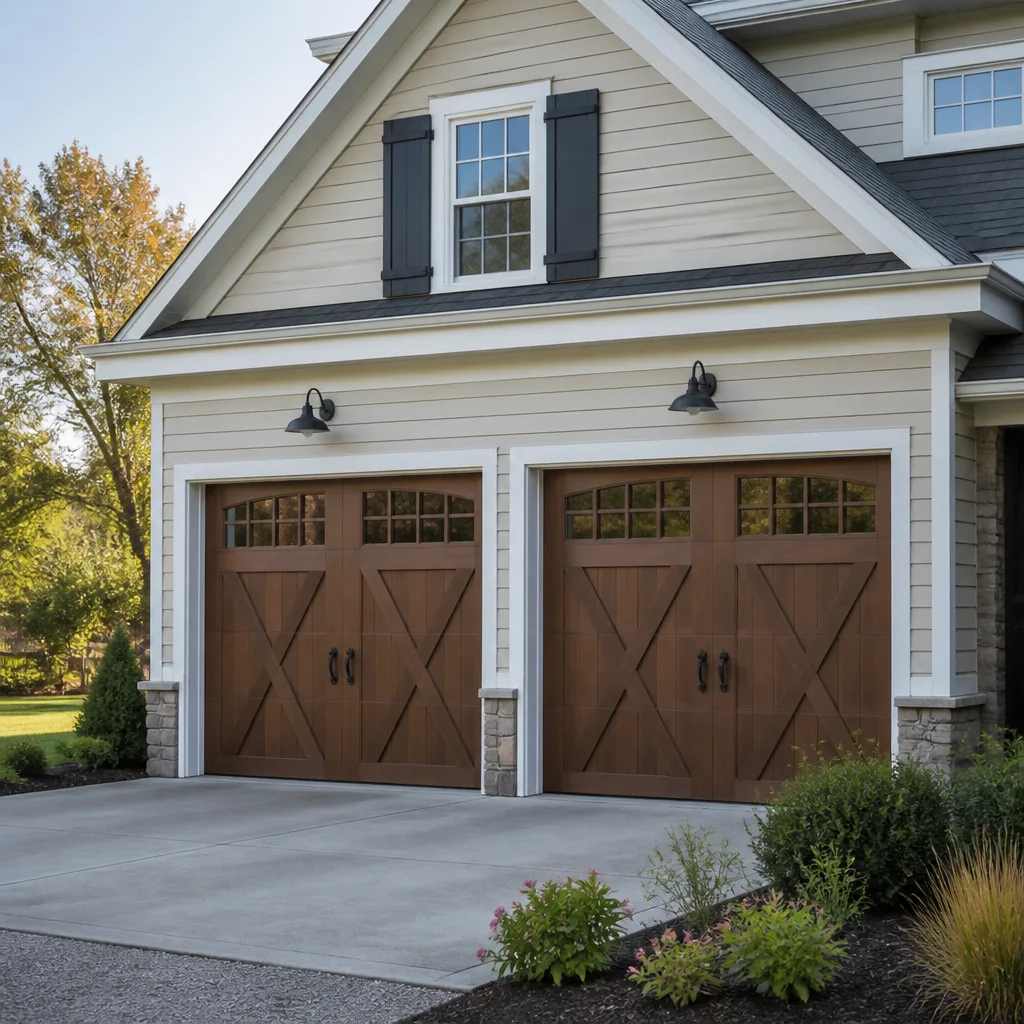 Carriage house
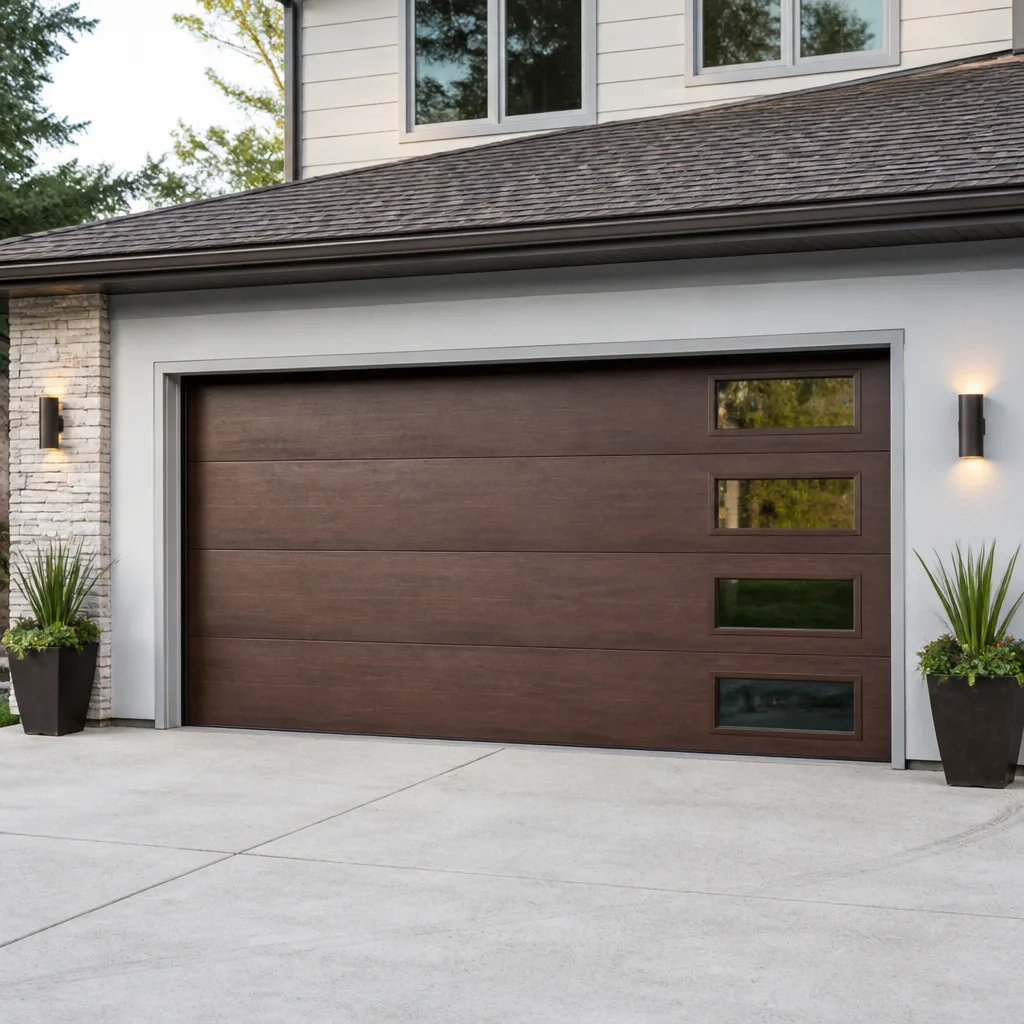 Modern flush
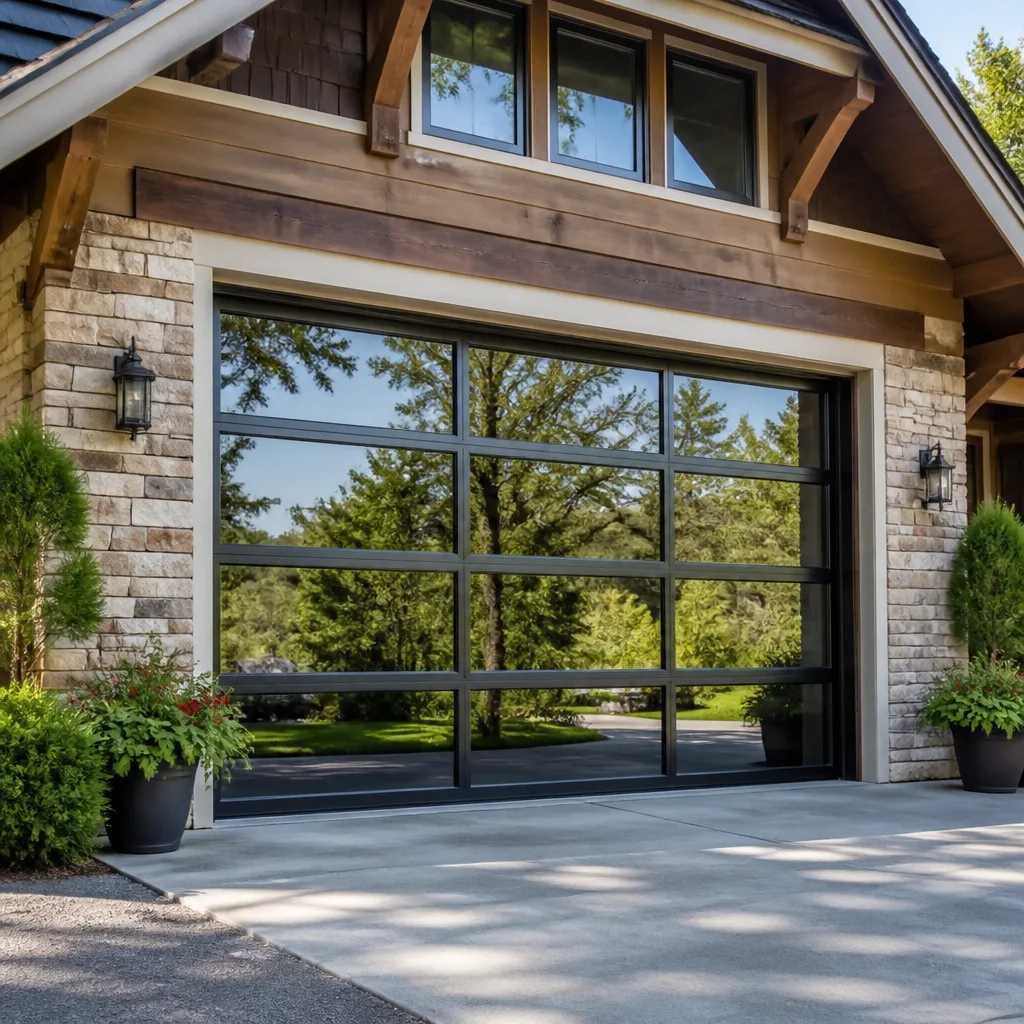 Full-view glass
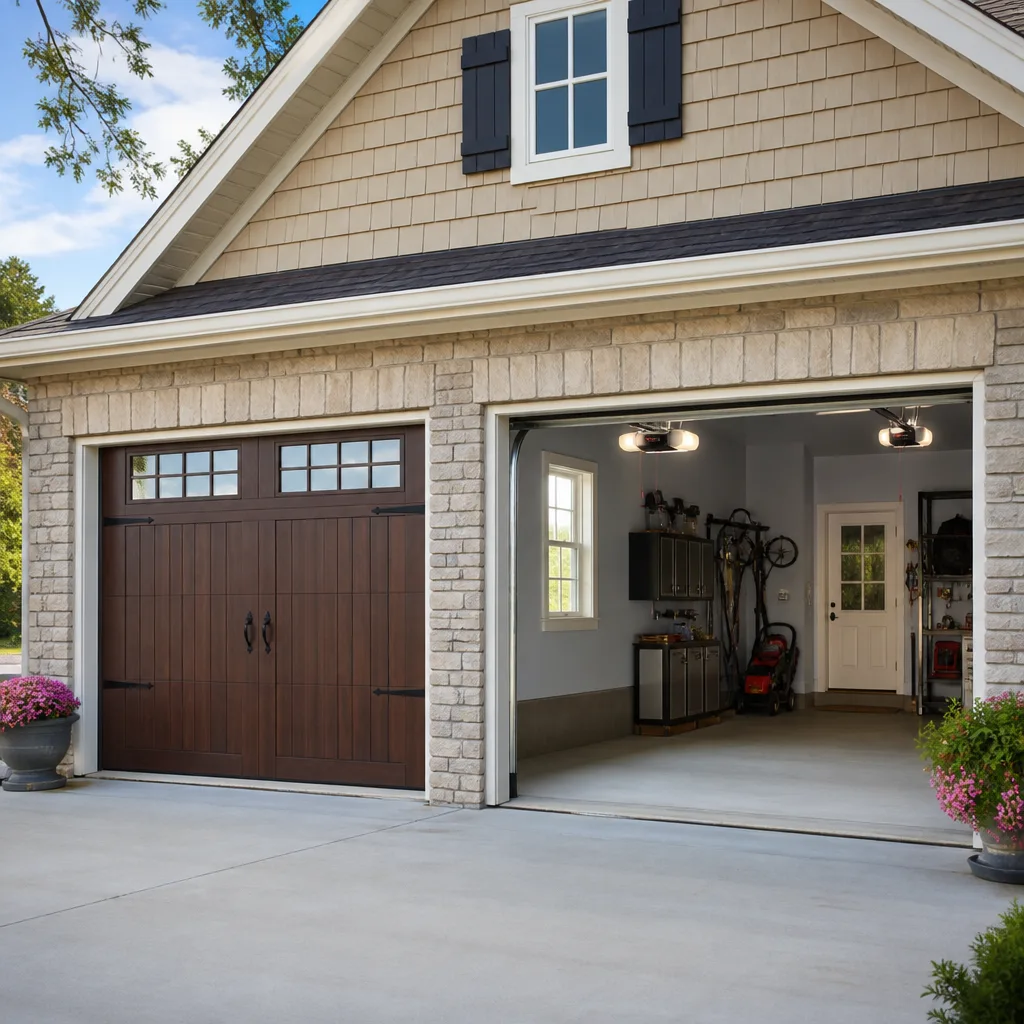 LiftMaster openers
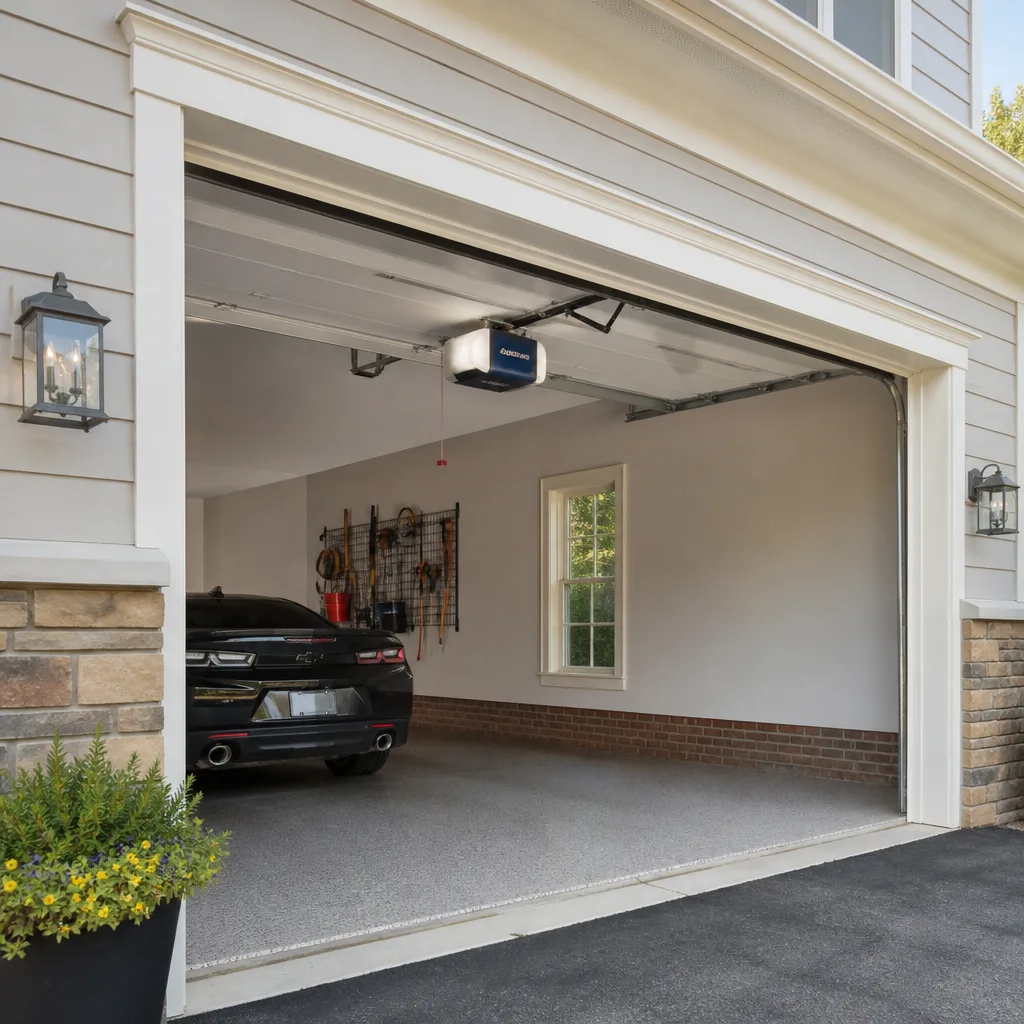 Chamberlain openers
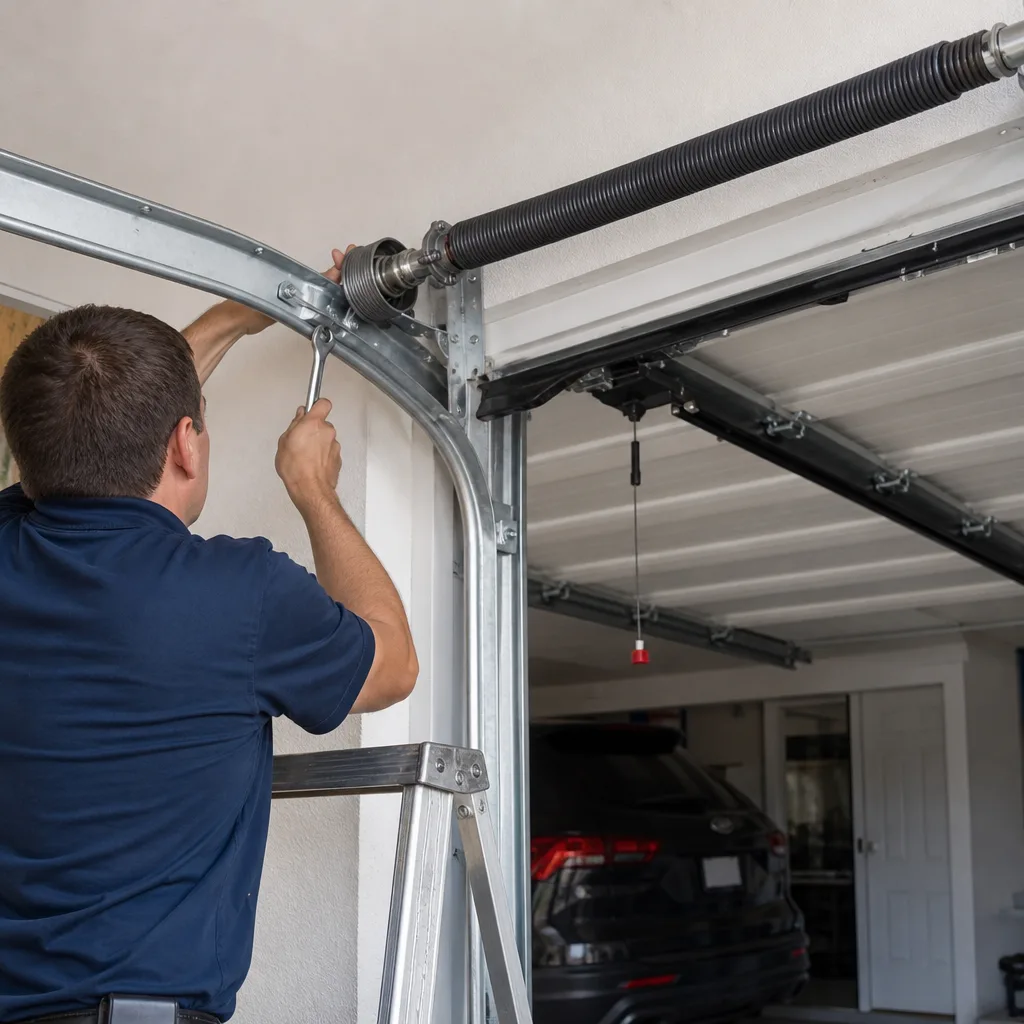
Full 25-point door and opener safety check with every visit - springs, cables, rollers, tracks, and your LiftMaster or Chamberlain opener included
You get a price before we start. It does not change when the truck arrives.
Get your free estimateSeasonal Garage Door Care for Coral Gables: Year-Round Homeowner’s Guide
Most garage door maintenance advice circulating online was written for people who deal with snow, ice, and road salt. It has almost nothing to say to a homeowner in Coral Gables, where the real seasonal threats are humidity that never lets up, ultraviolet exposure that turns rubber weatherstripping brittle, and hurricane season’s sudden pressure swings that can knock a finely balanced door out of alignment. This guide lays out a care calendar built around the two seasons Coral Gables actually has: the wet, storm-active months from June through November, and the dry, cooler stretch from late fall into spring. For more on local maintenance, see our The Complete Guide to Garage Door in Coral Gables. If you follow these two cycles rather than a generic four-season checklist, you’ll catch the failures that actually happen here before they cost you a service call.
Styles & brands we work with
Quick Answer
Seasonal garage door care in Coral Gables means two distinct routines: a thorough pre-hurricane-season preparation each April or May (brace installation, hardware torque check, seal inspection, and spring lubrication) and a dry-season maintenance window from November through March for repairs that need controlled humidity. The two biggest risks here are salt-laden humidity corroding springs and tracks during hurricane season, and intense UV exposure degrading weatherstripping and opener components year-round. A twice-yearly inspection by a professional addresses both cycles and typically prevents the failures we see most often in Coral Gables. For details on what repairs to prioritize, read The Complete Garage Door Repair Guide for Coral Gables Homeowners.
Table of Contents
- Why Coral Gables Has Two Seasons, Not Four
- Pre-Hurricane Season Preparation (April – May)
- Mid-Season Care During Hurricane Months (June – November)
- Post-Storm Inspection Protocol
- Dry Season Maintenance and Replacement Window (November – March)
- Year-Round UV and Thermal Cycling Damage
- A Monthly Garage Door Check You Can Do in 10 Minutes
- Common Mistakes to Avoid
- When to Call a Professional
- Frequently Asked Questions
- The Bottom Line
Why Coral Gables Has Two Seasons, Not Four
In Coral Gables, your garage door’s worst enemies aren’t winter ice or spring mud. They’re June through November’s combination of humidity spikes, windborne salt, and the pressure differentials that Category 1+ storms create even from 50 miles away. A door that operates smoothly in January can bind, squeal, or refuse to close properly by August, and the reason is rarely a failed part. It’s the accumulated effect of moisture, corrosion, and thermal cycling working on components that were never designed for this specific climate.
We think of the Coral Gables garage door calendar in two blocks. The first is hurricane season, roughly June 1 through November 30, when the air is heavy, salt-laden, and relentlessly humid. The second is the dry season, from late November through March, when humidity drops, temperatures moderate, and the air is far kinder to metal, springs, and adhesives. Each season creates its own failure profile. Hurricane season attacks through corrosion and storm stress. Dry season exposes what corrosion started, and it also gives you the best conditions for repairs, adjustments, and full replacement work. Planning around these two blocks, rather than a northern calendar of winterizing and spring tune-ups, is the single biggest advantage a Coral Gables homeowner can have.
What you’ll find below applies to every residential door in the area, whether it’s a Clopay steel door in a 1950s ranch in the French City Village or an Amarr carriage-house door on a newer build south of Bird Road. The specifics shift with door type and opener platform, but the climate pressures are universal.
You can also see our Coral Gables Garage Door Service home page for more on how we work and what we service.
Pre-Hurricane Season Preparation (April – May)
April and May are the months when Coral Gables homeowners should treat their garage door the way boat owners treat their hulls before storm season: inspect, tighten, seal, and reinforce. The goal is not just to keep the door working. It’s to keep the door attached to the house when a storm pushes against it. A garage door is the largest single opening in most homes, and when wind gets behind it during a hurricane, the pressure can buckle the door, blow out the tracks, and transfer enough force to the surrounding wall to lift a roof. Pre-season preparation in Coral Gables is a structural task as much as a mechanical one.
Here is the pre-hurricane season routine we recommend, in order:
- Install or verify hurricane bracing. If your door is rated for wind load, confirm the bracing posts are on site, fit correctly, and that you know how to install them. If your door is not wind-rated, have a professional assess it. Bracing is not a DIY afterthought; a properly braced door resists inward deflection across its entire width.
- Torque-check all hardware. Track brackets, hinge bolts, and opener mounting hardware vibrate loose over months of daily cycles. A socket set and 20 minutes catches loose fasteners before a wind event turns a small rattle into a track separation.
- Inspect the bottom seal. The rubber strip along the bottom of the door keeps out rain, leaves, and in Coral Gables, the fine wind-driven salt spray that accelerates corrosion on the interior side of the door. Look for cracking, flattening, or gaps where the seal meets the floor. Replace anything that doesn’t sit flush along its full width.
- Lubricate springs, hinges, and rollers. Use a lithium-based grease on hinges and a silicone spray on rollers and torsion springs. Do not use WD-40 as a lubricant; it’s a solvent and will strip whatever protective film remains. Humidity accelerates rust, and lubrication is the cheapest barrier you can apply.
- Test the auto-reverse and force settings. Place a 2×4 flat on the ground under the door and close it. The door should reverse within two seconds of contact. If it doesn’t, your opener’s force limits need adjustment. This is a safety system, not a convenience feature, and it’s one of the most common things Coral Gables homeowners skip.
We field more calls in May about openers that won’t respond during a pre-storm test than any other single month. The usual causes are corroded safety sensor connections, failing capacitors in older opener boards, or worn drive gears in chain-drive units. If your opener has a Genie or Chamberlain badge and is more than eight years old, pre-season testing is the time to learn whether it’s going to survive another wet summer.
Mid-Season Care During Hurricane Months (June – November)
The problem with hurricane season in Coral Gables is not just the storms. It’s the weeks of preparation before each one, when homeowners close their garage doors and leave them closed, sometimes for days. A garage that stays shut in 85 percent humidity becomes an enclosed, stagnant, salt-laden environment. Rust accelerates on torsion springs, extension spring pulleys, and the inner faces of steel track. The same cycle repeats with every named storm that passes within a hundred miles.
Here’s how to mitigate that:
- Run the door once every two days during extended closures. A full open-and-close cycle redistributes whatever lubrication remains on the springs and moves the track bearings through their full range. It also tells you early if something has seized.
- Ventilate the garage for 20 minutes after a storm passes. Open both the door and any side door or window (if you have one) and let the air exchange. This pulls moisture out before it settles into metal pores.
- Wipe down visible springs and track with a dry cloth monthly. In Coral Gables, salt spray does not always come from the ocean. It comes from the air itself, and it coats everything. A monthly wipe of exposed hardware during hurricane season removes surface salt before it pits steel.
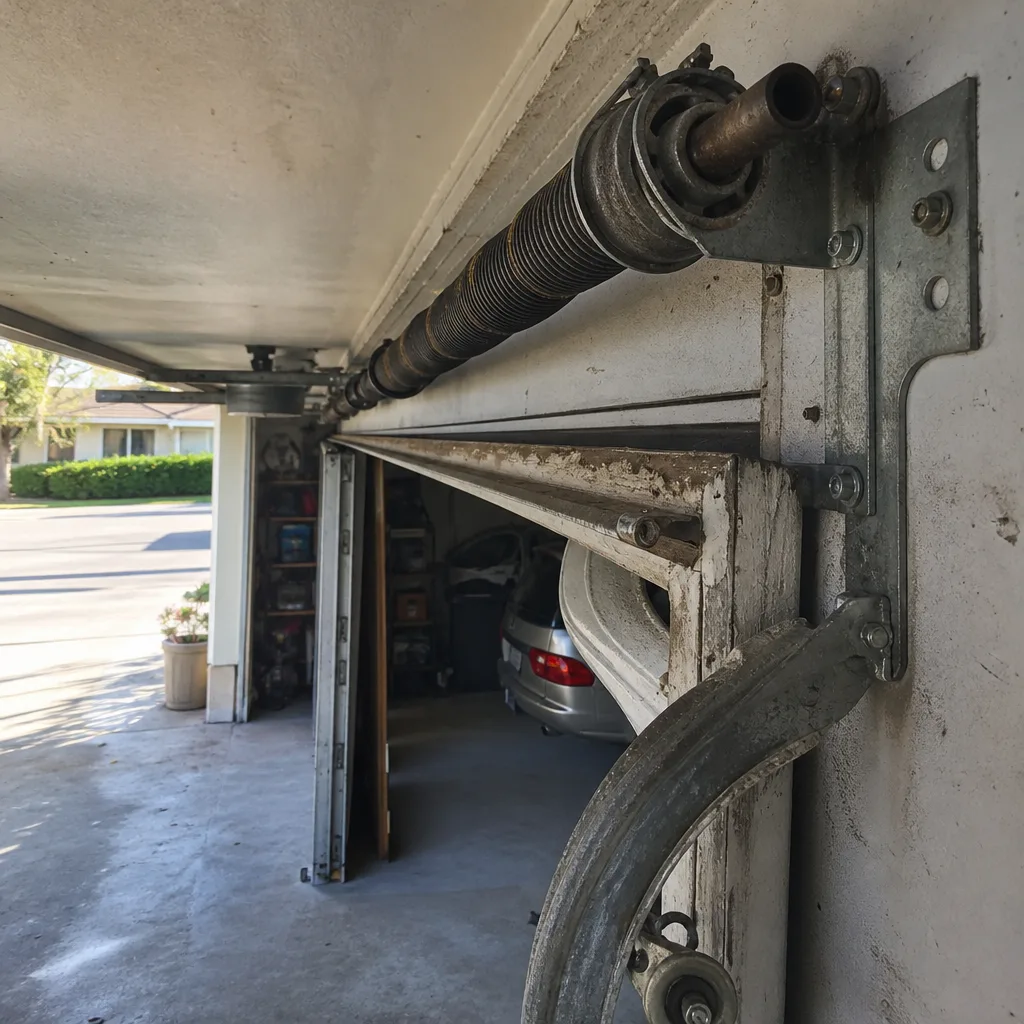
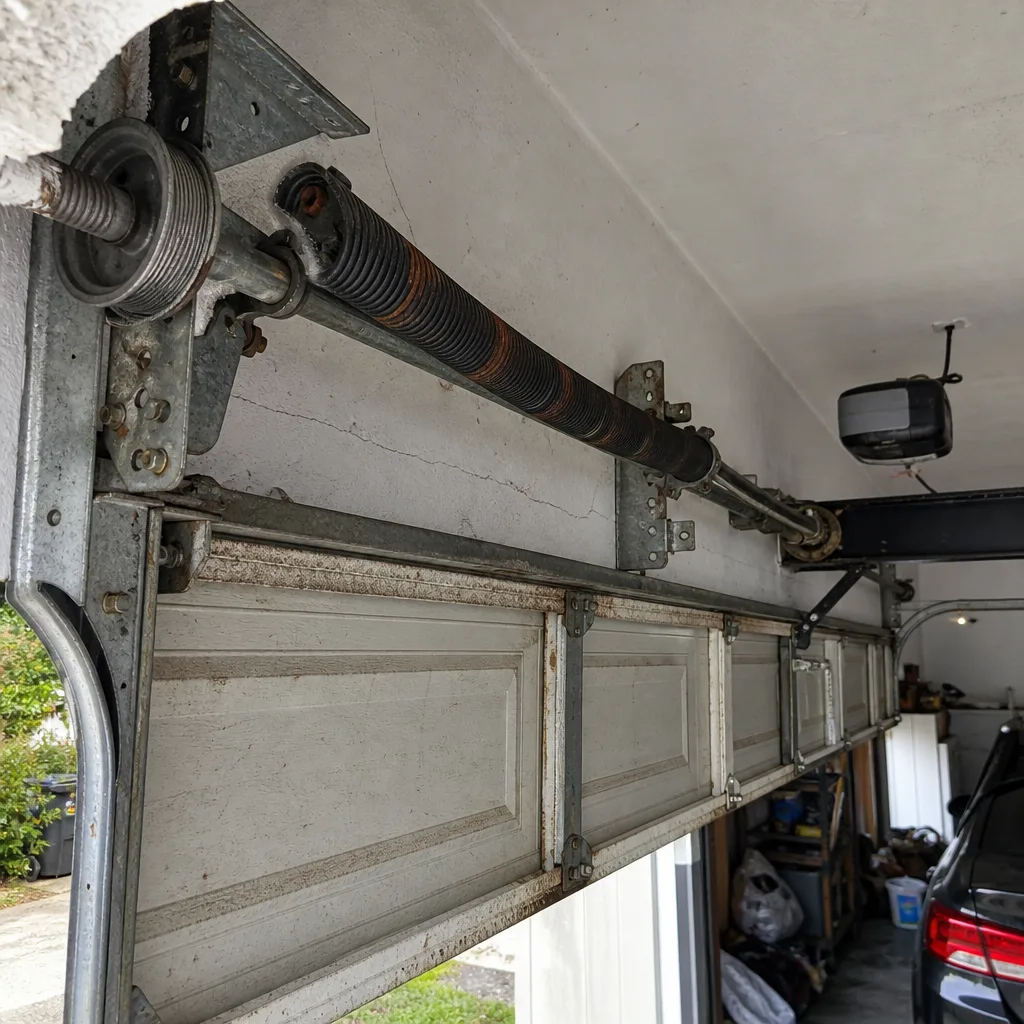
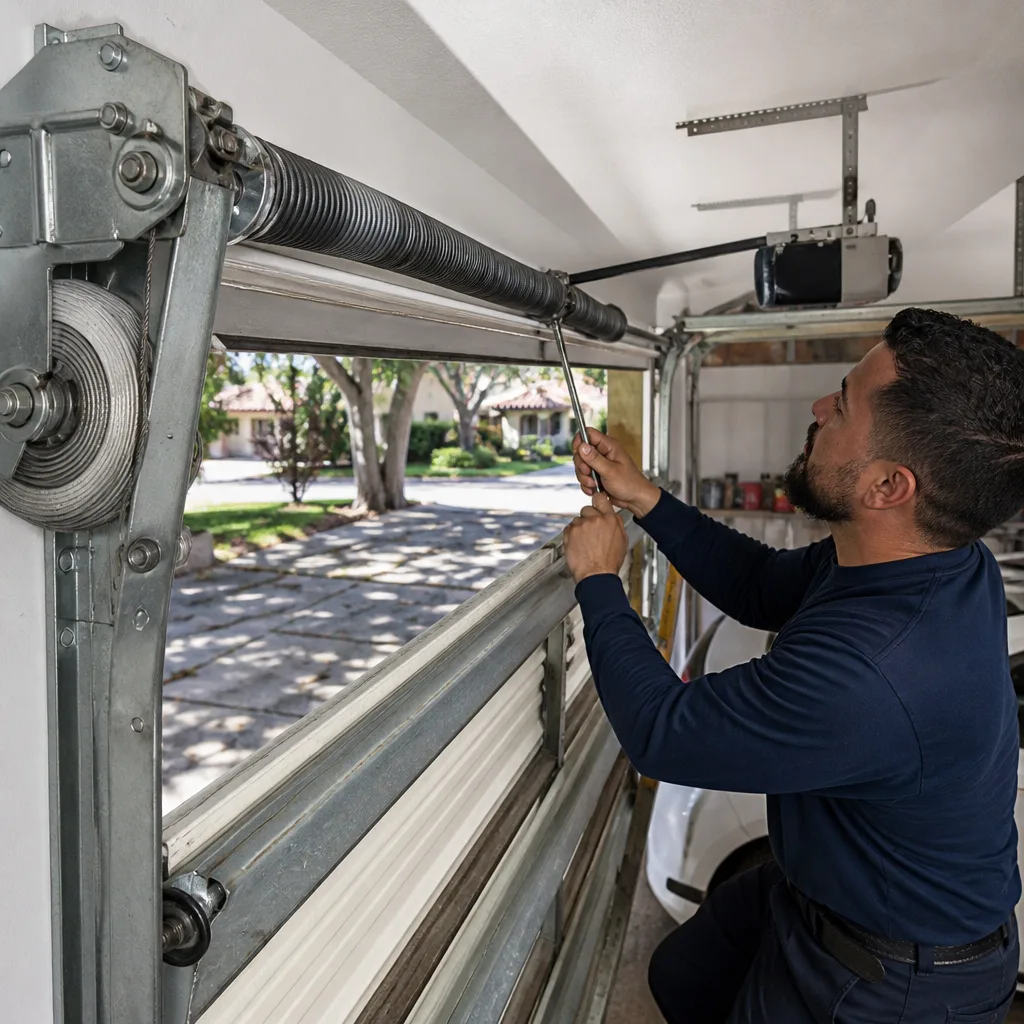
- Check for rust bloom on torsion springs. If you see orange-brown streaking on a spring, it has begun oxidizing. A spring that’s heavily corroded can snap without warning, and a snapping torsion spring is extremely dangerous. Never touch or attempt to adjust a spring under tension. Call a professional.
One pattern worth knowing: doors that stay closed for long stretches during hurricane season often develop “first-open resistance,” where the opener strains and groans on the first cycle after days of sitting. That’s usually the rollers sticking in the track after humidity swelled their nylon sleeves. It’s not a failing opener. It’s a symptom of the climate. Running the door regularly through the season is the fix.
If your opener has been misbehaving during humid weeks, take a look at our Garage Door Opener Repair in Miami page for more on common humidity-related failures.
Post-Storm Inspection Protocol
After a tropical storm or hurricane passes through Coral Gables, your garage door has been subjected to something no product manual fully anticipates: sustained positive and negative pressure cycling. Wind pushing against the closed door loads the panels, tracks, and hinges in one direction. The low-pressure zone behind the wind loads them in the other. Doors that were perfectly aligned in May can be a quarter-inch out of track in October, and no one notices until the door jams halfway up.
Run this inspection the morning after any significant storm:
- Open and close the door manually. Pull the red emergency release cord and move the door by hand. It should travel smoothly with no binding, scraping, or sudden shifts. If you feel resistance at the same point in both directions, the track is out of parallel. If the door leans or sags, a hinge or panel has likely shifted.
- Inspect all four track brackets. Look for pulled screws, elongated holes, or gaps between the bracket and the wall. Wind loads transfer through the door into these brackets, and they are the first mounting point to fail.
- Check the header above the door. If you see fresh cracks in the drywall or stucco above the garage opening, the door may have flexed under load. That’s a structural concern, not just a door concern.
- Test the opener’s force and travel settings. Use the opener to close the door and watch for jerky or uneven movement. A door that was slightly bent by wind pressure will often trip the opener’s safety reversal intermittently. That’s the system working, but it means the door needs attention.
- Look for water intrusion at the bottom corners. After a heavy rain, damp spots on the garage floor near the door corners usually mean the bottom seal is no longer making full contact. In Coral Gables, standing water in a garage becomes a mosquito and mold issue quickly.
If the door is binding, scraping, or refusing to stay on track after a storm, do not keep cycling it with the opener. Every forced cycle adds wear to the drive gear and can bend the track further. A track realignment and rebalance is a standard repair, and it’s always less expensive than replacing a damaged panel or opener motor. For more on that, visit our Garage Door Repair in Miami guide.
Dry Season Maintenance and Replacement Window (November – March)
If hurricane season is when Coral Gables garage doors fail, the dry season is when you fix them. From November through March, relative humidity drops into the 60s and 70s instead of the 90s, and that change matters more than most people realize. The lower moisture load means adhesives cure properly, steel doesn’t flash-rust after being cut or drilled, and powder-coat finishes adhere the way the manufacturer intended. The dry season is the optimal Coral Gables window for anything that involves new materials: panels, tracks, springs, full door replacement, or opener installation.
Prioritize these jobs during the dry months:
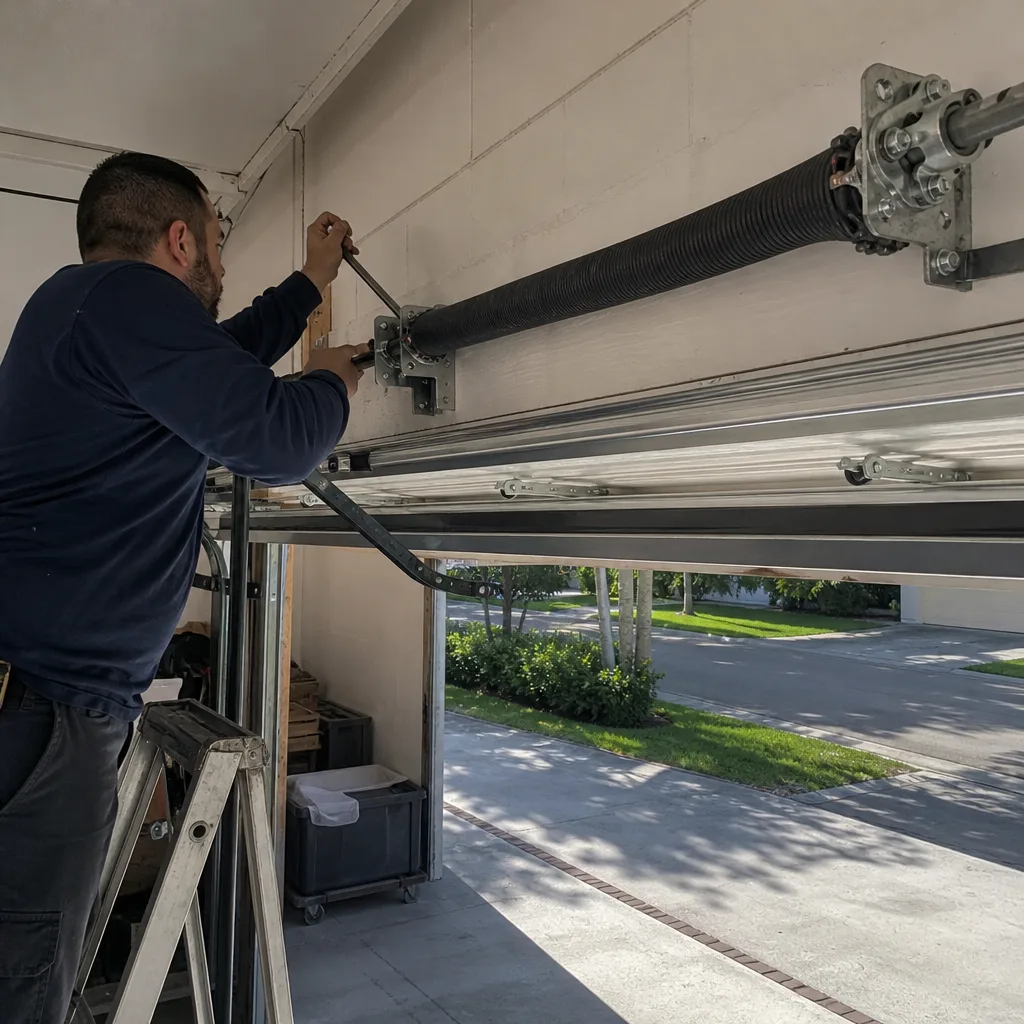
- Spring replacement. Torsion and extension springs fail on cycle count, not age, but in Coral Gables corrosion kills them earlier than their rated life. If a spring shows visible rust streaking or the door feels heavier than it did six months ago, replace it now, during the dry window. Spring replacement and rebalancing are professional jobs, done with calibrated winding bars and proper containment procedures.
- Track alignment. If your door has been scraping or the opener has been working harder than it should, dry season is the time to correct alignment. The fix holds better when humidity isn’t causing the wall materials to swell behind the brackets.
- Weatherstripping replacement. Bottom seals, side seals, and top jamb seals all degrade faster in Coral Gables UV than national averages suggest. Replace them during dry season when the new rubber can seat properly and won’t pull away from a damp surface.
- Panel replacement or repaint. If a panel is dented, rusting, or the finish has gone chalky from sun exposure, November through March is the window for the work. If you’re replacing panels on a door from Clopay or Amarr, dry-season installation minimizes the chance that fresh panel edges absorb moisture before the finish seals.
- New door or opener installation. If you’ve been considering a full replacement or an opener upgrade, schedule it during this window. The work goes faster, the materials behave better, and you won’t be testing new hardware during storm season.
For a full breakdown of the replacement process, see our Garage Door Installation in Miami page. It covers what to expect from a professional installation in this market, including how we handle multi-brand compatibility when a door from one manufacturer needs to work with an opener from another.
Year-Round UV and Thermal Cycling Damage
Coral Gables sits at 25.75 degrees north latitude, which means the sun beats down on south-facing and west-facing garage doors with an intensity that product warranties written for Minnesota or Ohio simply don’t anticipate. The ultraviolet exposure here degrades rubber, vinyl, and plastic at roughly twice the rate seen in northern markets. That’s not a manufacturer’s defect. It’s physics.
What we see in the field, year after year:
- Bottom seals that crack and flatten within 24 to 36 months. The rubber loses its elasticity, then its shape. Once it flattens, it stops sealing against the floor, and then the rain, the leaves, and the salt-laden air all find their way in. Many Coral Gables homeowners replace weatherstripping twice as often as the national average, and that’s just the cost of living here.
- Safety sensor housings that yellow and become brittle. The plastic shells around photoelectric safety sensors on LiftMaster, Chamberlain, Genie, and Craftsman openers all degrade under sustained UV. Once the housing cracks, moisture gets inside and the sensor fails. A sensor that fails safely stops the door from closing, which is better than the alternative, but it’s still a service call.
- Belt-drive opener belts that stretch and glaze. A belt that would last 12 to 15 years in a cool climate can start skipping or fraying at 8 to 10 here. The heat inside a closed Coral Gables garage in August regularly exceeds 110 degrees, and belts are consumables under those conditions.
- Painted steel doors that chalk and fade on the sun-facing side. A Clopay or Amarr door with a factory finish still loses gloss and color density faster in South Florida sun. The structural integrity of the steel isn’t compromised, but the cosmetic aging is noticeable within five years.
- Circuit boards in older openers failing after thermal cycling. The combination of high heat, high humidity, and daily temperature swings stresses solder joints and capacitors. This is why opener failures in Coral Gables cluster in August and September, after months of accumulated heat load.
The mitigation for UV damage is mostly about selection and placement. Choose weatherstripping rated for high-UV environments when replacing seals. Consider belt-drive openers rather than chain-drive if you’re upgrading, since belts run quieter and smoother in humid conditions even if they wear faster. And if you’re choosing a new door, a lighter color reflects more heat and reduces thermal cycling stress on both the door and the opener’s electronics.
A Monthly Garage Door Check You Can Do in 10 Minutes
Most of what a professional does during a service call is inspect, listen, and measure. You can do a surprisingly effective version of that yourself once a month, and in Coral Gables’s climate, it will catch problems early enough to keep small issues small. Here’s a routine that takes ten minutes and requires no tools beyond a flashlight and a pair of eyes:
- Open the door fully and walk underneath it. Look up at the panels, the track, and the spring area. You’re checking for rust streaks on springs, gaps between track sections, and any panel that looks misaligned or dented.
- Close the door and watch the bottom seal. It should compress evenly along the floor with no visible daylight underneath. Run your hand along the seal (it’s safe, the door is closed) and feel for cracks, flat spots, or brittleness.
- Run the door through a full cycle with the opener. Listen. A door in good mechanical condition makes a steady, even hum from the opener and a soft rattle from the rollers. Grinding, screeching, or rhythmic thumping means something needs attention.
- Test the auto-reverse. Use the 2×4 method from the pre-hurricane section. If the door doesn’t reverse, stop using the opener and call a professional. This is the one check you should never skip for long.
- Check the opener’s LED or diagnostic indicators. Many LiftMaster, Chamberlain, and Genie openers have a blinking light or diagnostic code that signals maintenance needs. A slow blink on some models means the battery backup is charging or failing. A rapid blink can mean reversed or obstructed sensors.
Do this on the first weekend of every month. It’s a ten-minute habit that prevents the vast majority of surprises we see on service calls in Coral Gables.
Common Mistakes to Avoid
- Skipping the pre-hurricane torque check because the door “works fine.” A door can operate smoothly with loose track brackets right up until a wind event sends a panel through the opening. Operation and structural security are different tests, and the second one only matters when the storm arrives.
- Lubricating with WD-40 or household oil. Both are solvents first and lubricants second. They strip protective films and leave components more exposed to Coral Gables humidity than before. Use lithium grease on metal-to-metal contact points and silicone spray on rollers and springs.
- Ignoring a door that’s slower in August than it was in January. A door that moves noticeably slower during humid months is usually telling you the springs have lost tension or the track is binding. Waiting until it stops moving entirely turns a spring replacement into an emergency call, and emergency service always costs more than scheduled work.
- Replacing the opener before checking the door balance. In Coral Gables, openers fail because doors are out of balance, springs are corroded, and the motor has been compensating for months. Pull the release cord and try lifting the door manually. If it’s heavy or won’t stay up, the door needs work, not the opener.
- Waiting until hurricane watch to install storm bracing. Bracing posts need to be properly fitted and tested before the wind arrives. In the 48 hours before a storm, hardware stores sell out of posts, and service trucks are booked solid with calls from every block in Coral Gables.
- Looking at the garage door only when it’s misbehaving. The door that gets inspected only when it breaks is the door that costs the most to own. Monthly checks catch loose hardware, early rust, and seal failures before they become structural or mechanical failures.
When to Call a Professional
Some garage door work is squarely in the homeowner’s lane: lubrication, visual inspection, seal replacement, and the monthly checks described above. Other work is not. Torsion and extension springs are wound under extreme tension and can cause serious injury or death if they snap during adjustment. Track realignment requires careful measurement and often wall repair behind the brackets. Opener diagnosis involves live electrical components, and misdiagnosing a board versus a capacitor versus a motor means spending money on parts that don’t fix the problem.
If you notice any of the following, stop and call: a spring that’s visibly rusted or has a gap in its coils, a door that binds or comes off track, an opener that trips a breaker or smells of burning plastic, or a door that won’t balance manually. Coral Gables Garage Door Service offers free estimates in Coral Gables. Call (855) 752-9022 and we’ll tell you what’s happening, what it costs to fix, and whether anything needs attention before the next storm.
Frequently Asked Questions
Twice a year is the right cadence for Coral Gables: once in April or May before hurricane season begins, and once in November or December when the dry season starts and the humidity finally drops. The pre-season visit focuses on structural hardening and corrosion prevention. The dry-season visit focuses on repairs and replacement work that benefits from low humidity. A professional inspection between those two visits, plus your own monthly ten-minute check, is the most cost-effective maintenance schedule for this climate.
Yes, and in Coral Gables the effect is more aggressive than in most of the country. Salt-laden humidity from ocean air settles on torsion and extension springs and accelerates rust formation at the surface of the spring coil. Once rust pits the surface, stress concentrates at those pits, and the spring loses tension and eventually breaks. Spring replacement in coastal Florida markets happens earlier in a door’s life than in dry climates. If you see orange streaking on a spring, have it assessed. Call (855) 752-9022 for an exact quote, estimates are free.
If your door is rated for it and the bracing posts were supplied with the door, installation is usually straightforward and the manufacturer provides instructions. The important caveat is that bracing only works if the door, tracks, and brackets are in good structural condition first. A brace on a door with loose track brackets or corroded hinges transfers wind load unevenly and can fail catastrophically. If you’re unsure whether your door is wind-rated or whether the mounting points are sound, have a professional assess it before the season starts.
This is one of the most common patterns we hear about from Coral Gables homeowners. The cause is usually humidity-driven expansion: the nylon sleeves on rollers absorb moisture and swell, the track brackets shift slightly as the wall materials behind them expand, and the door becomes tighter in its track. It’s not a failing door, but it is a door that needs minor adjustment. A track alignment and roller inspection during the dry season will usually resolve the sticking before the next humid cycle begins.
The dry season, from November through March, is the clear answer. Lower humidity means adhesives and sealants cure properly, steel and aluminum don’t flash-rust during installation, and powder-coat or paint finishes bond the way the factory intended. You also avoid the mid-summer scenario of testing a brand-new door during the most stressful weeks of the year for that equipment. If you’re choosing a new door from Clopay or Amarr, or pairing it with a Chamberlain, Genie, or LiftMaster opener, dry-season installation gives every component its best start. Call (855) 752-9022 and we’ll provide a written quote with no obligation.
A seasonal inspection and standard maintenance visit in Coral Gables typically includes track inspection, hardware torque, spring lubrication, seal assessment, and an opener safety test. Repairs are quoted separately and are always priced and agreed before any work begins. The cost of maintenance is modest compared to the cost of a snapped spring or a door blown off its track during a storm, and most of our Coral Gables customers choose a twice-yearly schedule so nothing builds to that point. For an exact quote, call (855) 752-9022.
The Bottom Line
Coral Gables garage doors live in a climate that punishes neglect faster than most of the country, but the failures here are predictable. Salt-laden humidity attacks springs and track during the long, wet months from June through November. Ultraviolet exposure degrades seals, sensors, and finishes year-round. And the dry season, from November through March, is your best chance to repair, replace, and reinforce before the cycle starts again. A twice-yearly professional inspection, combined with a ten-minute monthly check you do yourself, will keep a Coral Gables garage door running for years beyond what the national average suggests. When you need a specialist who works on the brand you already have, we’re here.
Written by the team at Coral Gables Garage Door Service, serving Coral Gables since 2014. Explore more guides & resources on our blog.
See the difference
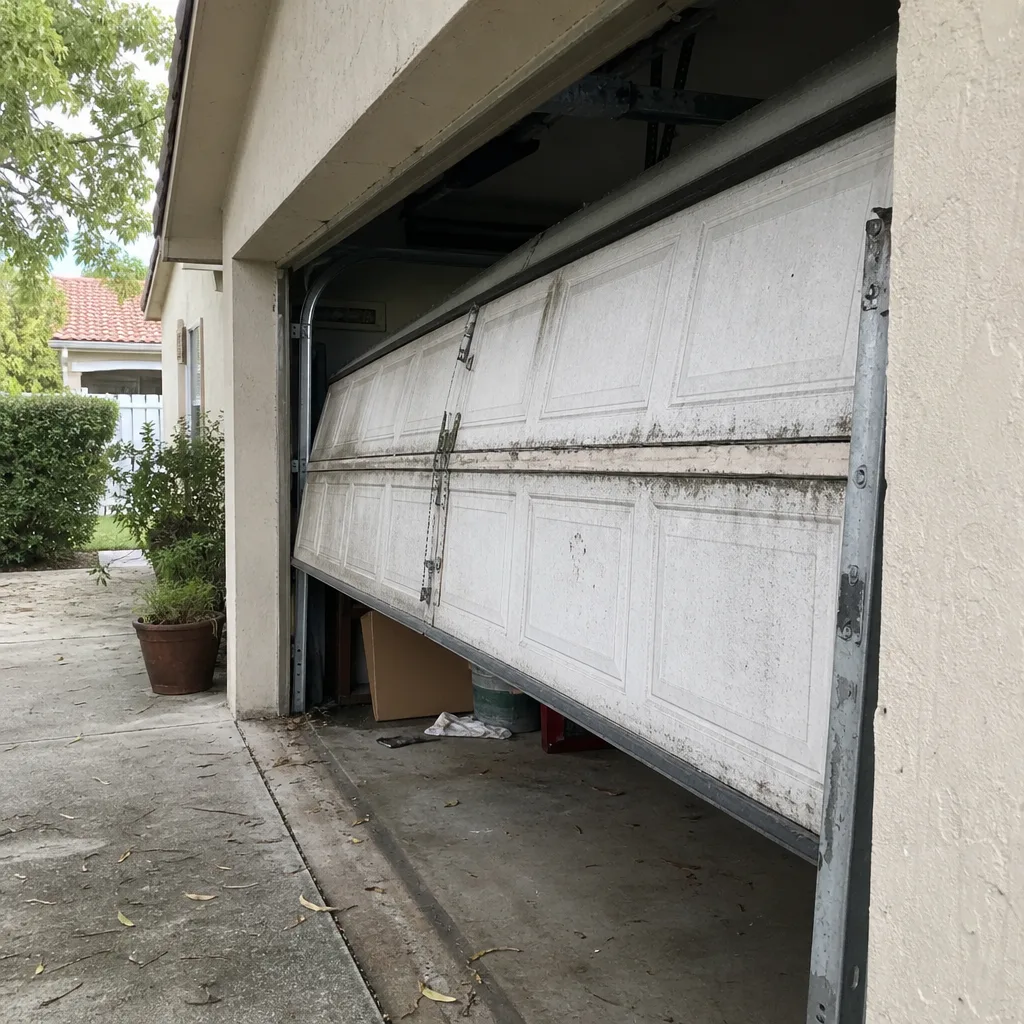 Before
 After
 Before
 After
 Before
 After